
329 Whapload Road
Current
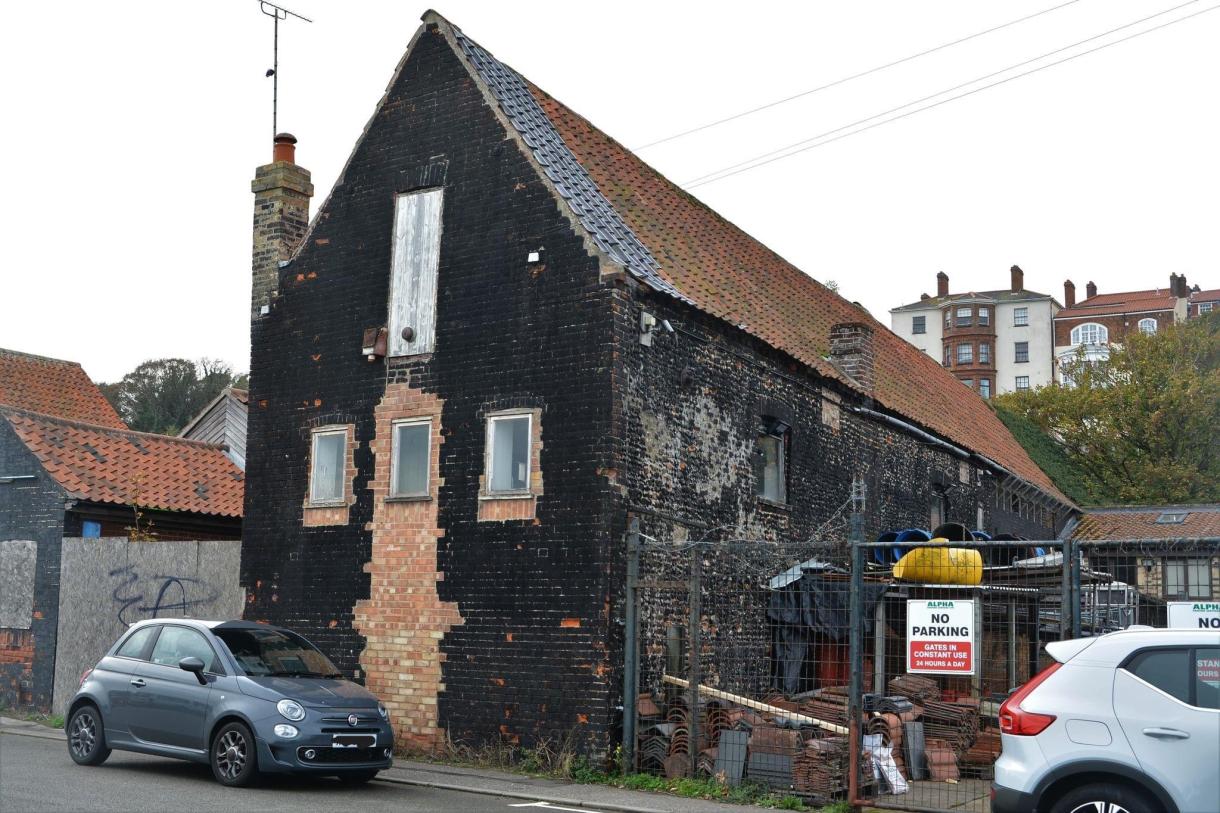
327 Whapload Road
Lowestoft
NR32 1UL
United Kingdom
This is certainly the most important work-related building left in town, connected with the Lowestoft fishing industry of pre-industrial times
History
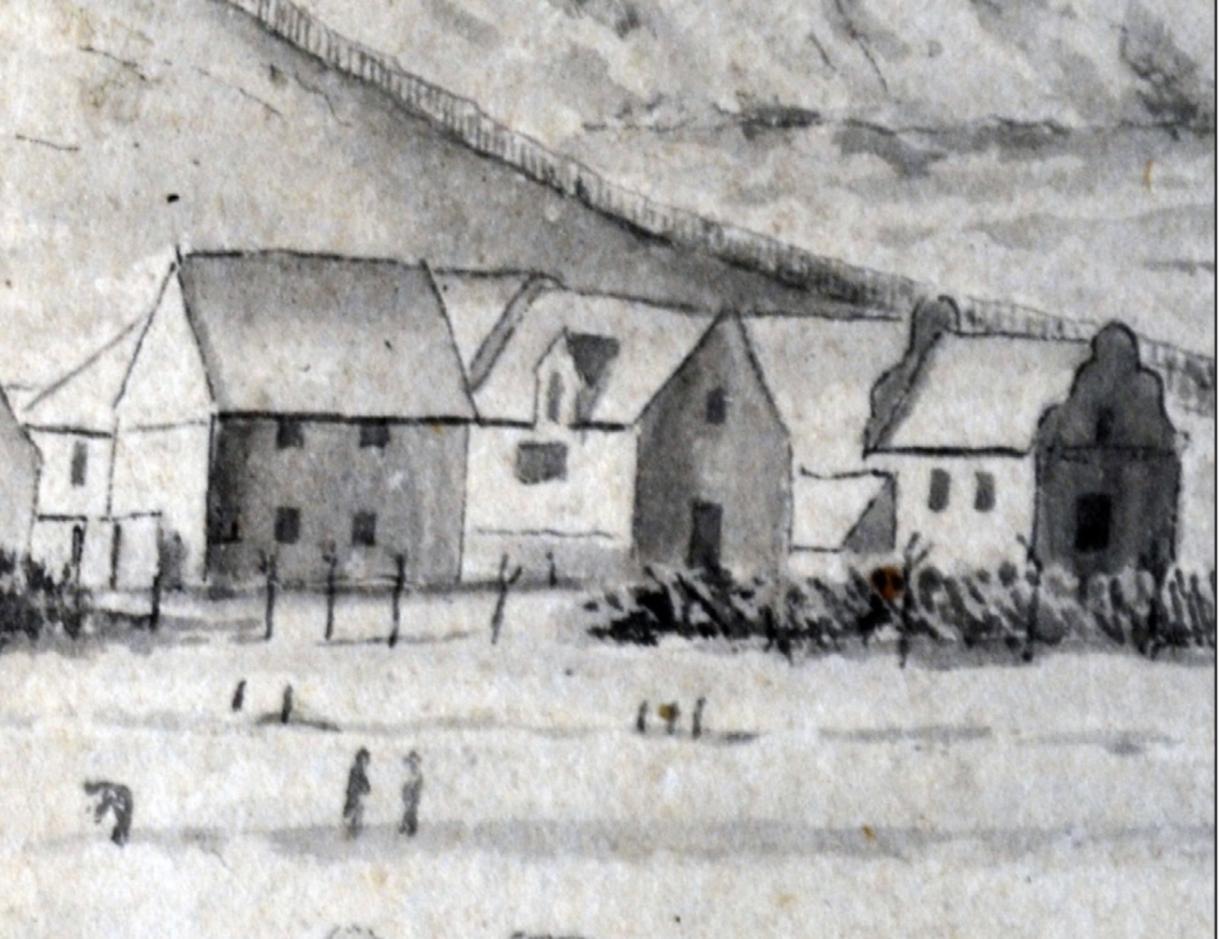
This is certainly the most important work-related building left in town, connected with the Lowestoft fishing industry of pre-industrial times, and which carries a Grade II listing from Historic England because of it. It is directly linked, thematically, with the image of the Raglan Street smokehouse premises in being used originally for the curing of red herrings, but then undergoing later conversion during the mid-19th century for use as a net-store.
This entailed stripping out the majority of the curing-frames (known as loves) and inserting a floor-level halfway up the building to create a long, open area for the repair and maintenance of drift-nets and, in some cases, trawl-nets as well. The work was largely carried out by women known as beetsters (al. beatsters) - the origin of this word being Old English betan, meaning “to amend” or “to repair”. Chaucer uses it in The Canterbury Tales (1387-1400) when Oswald, the Reeve of Norfolk - in his own particular tale - describes Roger, the rascally miller of Trumpington, in the following way: “Pipen he koude and fish, and nettes beete”. And John Wycliffe, in his English translation(s) of The Bible (1382-95), uses the word in reference to the calling of the disciples, James and John, found by Jesus mending fishing-nets beside the Sea of Galilee with their father Zebedee (Matthew 4. 21 and Mark 1. 19).
After the conversion of this building, the ground floor was then used for the storage of nets - either brought in for repair or ready to go out again for use at sea - and for other equipment connected with the work carried out, and the blocked door seen at first floor level was also a means of moving mended nets to ground-floor level. At one time, all net-stores had a brick-built furnace in the yard, close to the store, which heated water in the large copper above to boil the nets at the end of a fishing season in a preservative mixture of water and cutch (the gum of a tropical tree,
Acacia catechu) to give the gear a longer life. After treatment, the nets were hung on the drying-spars - some of which still survive at the northern end of the Denes. In earlier times, nets were soaked in a mixture of ash or oak bark (the same “brew” as used to tan leather) and then spread out to dry on the scrub vegetation growing there. Even when cutch became the means of preservation, the term tanning was still used for the process! On 10 March 1645, a disastrous fire which began in a fish-house beneath the site of the former No. 1 High Street (Nos. 3 & 4 - Beacon House and Arnold House - can be seen on the cliff-top) destroyed every fish-house along Whapload Road almost as far as Rant Score, as well as houses on the High Street sites now occupied by Nos. 47-63 (east side) and Nos. 143-149 (west side). The damage amounted to £10,297 2s 4d [£10,297.12], which cannot really be accurately converted to a value of today but would run into many millions. It would have taken Lowestoft some considerable time to recover from this disaster and No. 329 Whapload Road probably represents one small part of that process. The westernmost section of the building (nearest the cliff) was originally a free-standing mid-17th century salt-store for the material used in curing red herrings, which can only be determined from the inside of the whole building into which it was integrated later on as rebuilding of the destroyed predecessor took place - perhaps even as late as c. 1700.
The unit then became what was known at the time as a fish office, where everything involved in the curing process was under one roof. And so, it is a valuable survivor from Lowestoft’s maritime past - especially as the upper sections of the loves remain in place up to the apex of the roof, simply because there was no need to remove them when the building was converted to a net-store. The writer worked with Matthew Bristow of Historic England back in 2018-19, as part of the High Street HAZ project, and there is so much more which could be said about this building (and other ones on Whapload Road), but time and space won’t allow. For those readers who would like to take this further, look at Historic England’s listing of No. 329 Whapload Road, on the Internet, and particularly at Matthew’ Bristow’s full assessment there and elsewhere (with all its excellent illustrations) by logging in onto the following: 311-333 Whapload Road Lowestoft - Historic Area Assessment. You won’t be disappointed with either of them - particularly the latter.
Add new comment