
Corton Methodist Church
Current
118 Park Road
Lowestoft
NR32 4HU
United Kingdom
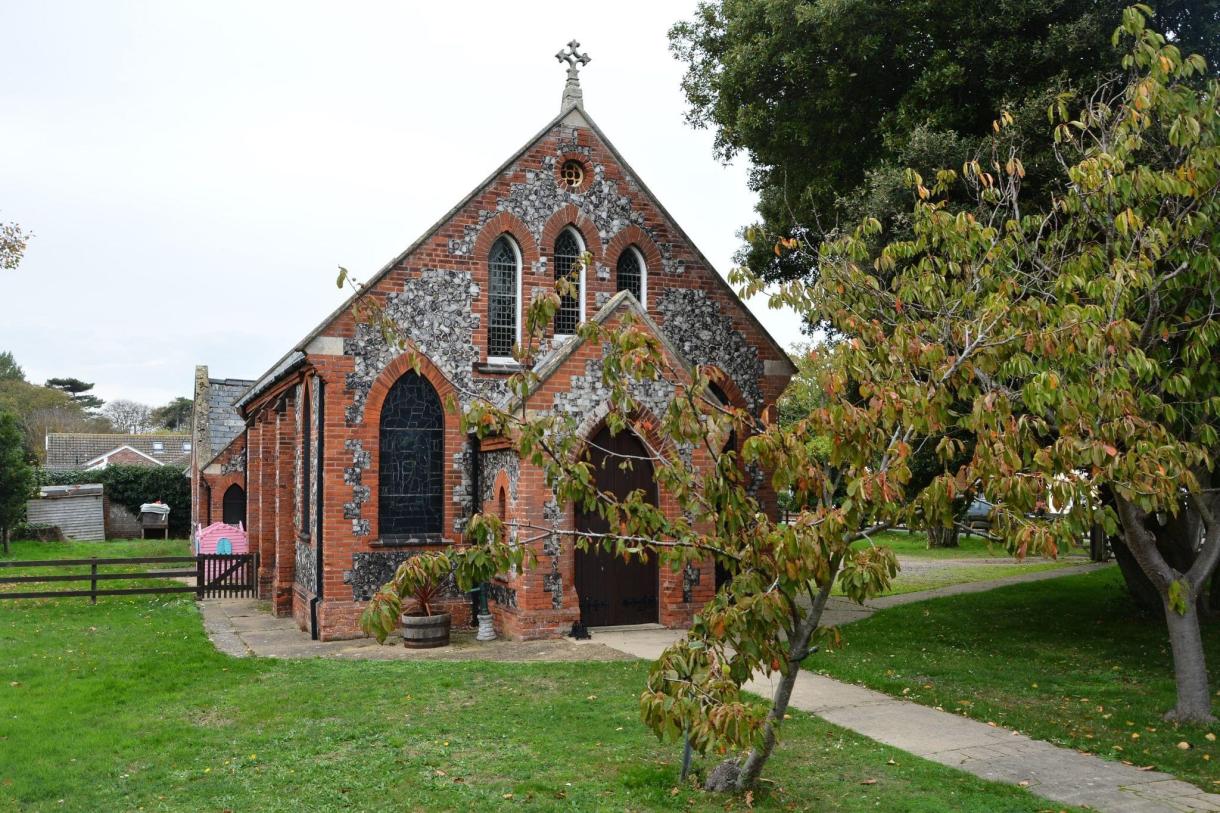
The Methodist Church, or Chapel, at Corton was built in 1873 and opened the following year
History
The Methodist Church, or Chapel, at Corton was built in 1873 and opened the following year - the direct result of the Colman family of Norwich (mustard manufacturers) moving into the village in 1869 and purchasing the manorial title of Corton from the local Fowler family, of Gunton. The house they acquired as a summer residence (called Cliff House) had been built in 1848 by Holland T. Birkett, a railway contractor, who just happened to be married to a sister of Thomas Grissell, Samuel Morton Peto’s cousin and business partner - with Grissell himself wedded to a daughter of Edward Leathes of Normanston House, Lowestoft.
Note the inter-connections here! Birkett’s Corton property was effectively doubled in size by its new owners and renamed The Clyffe, giving it a title befitting its mock-Elizabethan appearance. Reforming Nonconformist industrialists of the best kind (in the mould of the Cadburys of Bourneville, and the like), both Jeremiah James and his able wife, Caroline, made their mark not only on the Carrow-Lakenham area of Norwich, but on the community of Corton also. A five-minute walk down the village street, starting at the Playing Field and heading northwards, will reveal not only the Chapel (halfway down), but the head gardener’s bungalow, various pairs of good-quality estate workers’ cottages carrying the initials JJC and the year of construction during the 1880s and 90s, the estate workshop and forge to the rear of the Chapel, a terrace of four coastguard cottages (1876), the Village School (1896), the Village Reading Room (1890) - now serving as the school’s hall - and the Coffee House next door (1882), long since converted to ordinary domestic use.
Very much a model village of its time created by enlightened landlords, determined that part of their wealth should be used to improve the lives of their workers. The architect for all of this work (and that on The Clyffe itself, with the assistance of Caroline Colman) was Edward Boardman Snr., who had trained during his early years under J.L. Clemence of Lowestoft. His son, Edward Jnr., was also a capable architect, in his own right - one who married the Colmans’ daughter Florence in 1898. The Chapel building (which is still in regular use), as seen here, has a pleasing combination of red brick and dressed flint on its outward elevations - but the most notable feature is to be found on the inside, in the form of four, excellent, memorial stained-glass windows in the style of Edward Burne-Jones, commemorating Jeremiah James (ob. 1898), Caroline (ob. 1895) and their son Alan (ob. 1897) - the last-named dying of tuberculosis at the age of thirty. Caroline has two windows in her memory (on either side of the entry door), while Jeremiah’s is to the right (once you’re inside), on the north side, and Alan’s to the left on the south. They were all made in the James Powell & Sons workshop, at Whitefriars, Harrow - North-west London.
So much more could be written about both Jeremiah James and Caroline Colman (he with his Baptist-Congregationalist roots and she with her Methodist ones), but neither time nor space will allow. The Clyffe was demolished in 1917 (threatened with sea erosion), though concrete remnants of a private, protective sea wall and promenade may still be seen close inshore (especially at low tide), and some of Caroline’s planting is evident in the many holm oaks and Scots pine trees present in the grounds of the present-day Azure Seas Caravan & Holiday Park complex and also in Corton Wood itself, on the opposite side of the road. The wood also has a marked presence of different species of fern, which probably emanates from Caroline Colman’s love of flora and the natural world. She was an accomplished plantswoman.
Add new comment