
Retired NHS Womens Talk
https://lowestoftoldandnow.org/sites/default/files/inline-images/women10%20Medium.jpeg

Hi Im Joe Thompson
Here to celebrate and highlight Lowestoft's Inspirational women both past and present. How there is more work to be done in telling their stories and other stories from your street and community and some of the tools we have built to help you tell these stories if you wish.
But first some background
Wouldn’t it be great if..
That’s the phrase that started BOTH the projects we want to show you today
We also knew that we wanted them to tell interesting local stories, but in a new compelling way. They had to have great community involvement (both face to face and online social media) and be templates that could be reused in the future
![[Felixstowe tab]](https://ourfallen.lowestoftoldandnow.org/sites/default/files/2023-07/Felixtowe.jpg)
![Excel spreadsheet tab]](https://lowestoftoldandnow.org/neverremove/excel03.png)
DRUMROLL home page
Doris, a 17 year old civilian was a casualty of the Waller raid. (use to show elements of page)
Main para, created by combining most of the key fields, thus making it more readable
Got an Update? Creates an email with all key info in
Memories - Usually contributed by family and can give a fascinating insight into the person and the times in which they lived. Whilst not verifiable from primary sources (hence different colour) it is a valuable part of the project
Same Age - In this case 26 were 17 like Doris. looking at those first three tells us navy army navy..rhs dots
Moderated comments - involve community
Extra Details - Service, Memorial etc
Caroline Mary Norman
She was a member of the Civilian Nursing Reserve (C.N.R) and an Ambulance Sister with the Saint John's Ambulance Brigade (S.J.A.B.). Caroline was killed during an air raid. She died at the First Aid Post, Till RoadA Civilian, Caroline died on 9th of April 1941 at the age of 47.Caroline was born at Haughley, near Stowmarket, on 25 December 1893, a daughter of George and Alice Sore. In 1901 she lived with her family at Haughley, and at some point her parents lived at 16 Duke Street, Haughley. Caroline married Henry Francis Norman in 1918.
By 1939 Caroline, Henry, and their children, were living at 2 Whitehouse Cottages, Flixton.
Wouldn’t it be great if..
we could take our list of high street businesses and turn it into list of shopfronts positioned horizontally next to each other giving the impression of walking virtually down the high street. Clicking on a shop you are interested in would show you more details

https://lowestoftoldandnow.org/full/strolleast#4
https://lowestoftoldandnow.org/sites/default/files/2023-09/ArnoldHouseBack.jpg

https://lowestoftoldandnow.org/full/strolleast#13
Our exploration of Lowestoft's Inspirational women Starts here and it links to TWO significant women.. the old vicarage and our histric street stroll..

Taught, organised women’s groups, assisted the homeless from the vicarage of Lowestoft St Margaret's. As Richenda Gurney, she was born at Bramerton, Norwich on 5 August 1782, the sixth of the twelve children of John Gurney (10 November 1749–28 October 1809), a banker, of Earlham Hall, Norwich, and his wife Catherine Bell (18 November 1754-17 November 1792), daughter of Daniel Bell and Catherine Barclay. Richenda was raised in the idyllic Norwich estate of Earlham Hall and her family were members of the Religious Society of Friends, or Quakers, and Richenda's sister was one of the most prominent Quakers in British history, Elizabeth (Gurney) Fry (1780-1845), the renowned prison reformer whose portrait was featured on the five-pound British note. At age ten, Richenda became a pupil of Norwich landscape painter John Crome (1768-1821), founder of the Norwich Society of Artists. Crome often accompanied the Gurneys to popular travel destinations and worked closely with Richenda, who masterfully drew her surroundings, Richenda was also instructed in painting by Henry Brightwhilst he was in London. Whilst many artists of her time pursued art solely for enjoyment, Richenda engaged in profitable artistic ventures. At twenty-nine, she was the only woman to publish her work in 'The Architectural Antiquities of Great Britain', an influential sourcebook for the Gothic Revival by antiquarian John Britton (1771—1857). She married at Earlham on 31 January 1816, the Anglican Revd Francis Cunningham (27 July 1785-8 August 1863), rector of Pakefield, Suffolk later adding the vicarage of Lowestoft St Margaret's, from where she taught, organised women’s groups, assisted the homeless, but continued to pursue art. Richenda Cunningham died on 11 August 1855 and was buried in the family vault in St Margaret's Lowestoft churchyard. She was also the author 'Nine Views Taken on the Continent' (c.1830) in which she collaborated with London printmaker Charles Joseph Hullmandel (1789-1850), a leading figure in 19th-century English lithography, and other works.

played a significant role in the spread of education, Christianity, and healthcare in Ibadan, leaving a lasting legacy in Nigeria. Anna Hinderer (nee Martin) was born in 1827. After her mother’s death when Anna was five, she lived with her grandfather and aunt until the age of twelve, when she moved to Lowestoft. In Lowestoft, she resided at the vicarage 13 High Street, working as a secretary to Reverend Francis Cunningham and his wife, Richenda. During this time, Anna served as a Sunday School teacher and experienced a personal religious conversion. Her experiences in Lowestoft were instrumental in shaping her faith and missionary aspirations. In 1852, she married David Hinderer, and together they embarked on missionary work in Ibadan, Nigeria.

first woman to serve as a justice of the peace in Lowestoft. In 1921, she was among the pioneering women appointed to this esteemed position. Margery was a driving force within the Association of Women Magistrates and made substantial contributions to the justice system. (1874–1958)
Her Grandmother was Elizabeth (Gurney) Fry a prominent English social reformer and female Quaker minister born in 1780.
Dervorgille De Balliol
established Balliol College, one of the oldest colleges at the University of Oxford (c. 1210-1290) She was one of the great women of the Late Medieval period. She became Lord of the Manor of both Lothingland and Lowestoft in 1228, doing a large swap of her family lands in Cheshire, with Henry III, for many royal manors in various parts of England. This, because the King wanted a buffer zone against the Welsh. She would never have visited Lowestoft, but collected the annual rents due from Lowestoft tenants via the manor’s steward.

She founded Balliol College, Oxford, for poor students in 1263 and guaranteed its survival with a permanent endowment in 1282. Wife of John de Balliol, Lord of Barnard Castle.
Amy Denny and Rose Cullender
They are both a reminder of the injustices of their time. During the first half 17th century the denizens of the ancient coastal town of Lowestoft in Suffolk, England, witnessed many upheavals their lives. Plague, fire, civil strife, a rapid decline in the local fishing industry and an expensive law-suit with the neighbouring town of Great Yarmouth all left their mark on this small community of under 2,000 souls.

Lady Pleasance Smith
Known for her her generosity and philanthropic work . She was born 11 May 1773 and was an English letter writer, literary editor, and centenarian. Smith lived to the age of 103, becoming well known in later life on account of her advanced years.
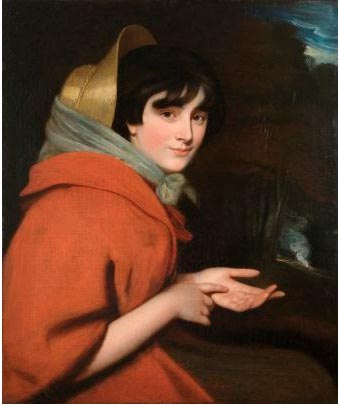
Smith was born in Lowestoft, Suffolk in 1773, the fifth child of attorney Robert Reeve and Pleasance (née Clerke). It was said that as a child, Pleasance was 'trained by both her parents to a love of nature and of literature', as well as having an 'innate' love of poetry.[2] In 1796, she married James Edward Smith (1759–1828), founder of the Linnean Society.[1] The couple moved to 29 Surrey Street, Norwich, into a grand Georgian house given to them by Pleasance's father, which became a 'private museum' housing Smith's extensive collections.[3]
The year after her marriage, Pleasance Smith was painted "as a gypsy" by Cornish artist John Opie.[1] She was acknowledged for her beauty, with William Roscoe writing in 1804 that ‘he who could see and hear Mrs. Smith without being enchanted has a heart not worth a farthing.’[2] Pleasance outlived James Edward Smith by nearly five decades, maintaining a wide circle of friends and correspondents, with whom she discussed matters of science, art, religion, the humanities, and the natural world.[4]
Following the death of her husband in 1828, Smith edited his memoirs and some of his letters, a work published in 1832.[5] That year, Smith returned to Lowestoft.[1]
Smith became 'known for her generosity and philanthropic work',[4] as well as for giving advice 'freely on matters as diverse as religious questions and new knitting patterns'.[1] On reaching 99, she received a letter from her great-niece Alice Pleasance Liddell, the child immortalised in Lewis Carroll's Alice's Adventures in Wonderland.[1] On her hundredth birthday in 1873, a dinner was given in the Public Hall, Lowestoft, for the aged poor of the neighbourhood, and she received from the queen a copy of ‘Our Life in the Highlands,’ with the autograph inscription: ‘To Lady Smith, on her 100th birthday, from her friend Victoria R., May 11th, 1873.’[2]
A prolific letter writer throughout her life, Smith continued to write almost to her death, even as her eyesight began to fail. In 1873 she wrote:
I can yet see the landscape. This is a great alleviation, but I cannot see the lines I attempt to write.[2]
She retained her hearing, and her memory remained 'singularly accurate and tenacious'.[2] It was said too that she 'never lost her interest in political and literary topics, or her sympathy with modern movements', 'did not think the past age better than the present, and met fears of the dangerous tendencies of modern science with the remark, ‘I am for inquiry.’'[2]
Fiammetta Wilson
A fellow of the Royal Astronomical Society, remarkable contributions to astronomy
Fiammetta Wilson FRAS (born Helen Frances Worthington in Lowestoft; 19 July 1864 – 21 July 1920) was a British astronomer elected a fellow of the Royal Astronomical Society in 1916
After attending lectures by the renowned astrophysicist Alfred Fowler at the Imperial College of Science and Technology in London, she developed a profound passion for astronomy. This fascination led her to abandon most of her music and withdraw from social life. In 1910, she and her second husband, Sydney Arthur Wilson, were both elected members of the esteemed British Astronomical Association (BAA). Between 1916 and 1919, she collaborated with A. Grace Cook as an acting director of the BAA’s Meteor Section. During this period, she diligently observed and published data on various celestial phenomena, including auroras, zodiacal light, comets, and meteors.
Throughout her illustrious career, Wilson demonstrated an extraordinary level of dedication and perseverance. She would spend up to six hours at a time, peering through a telescope at even the cloudiest of skies, in an unwavering pursuit of catching a glimpse of a meteor. To enhance her research and ensure the accuracy of her findings, she constructed a wooden platform in her garden, providing her with an unobstructed view of the cosmos.
However, her observations were not without challenges. During World War I, she faced a threat of arrest from a constable who mistook her flashlight for a German spy’s device. Despite this setback, she continued her research even as zeppelins descended upon her neighborhood, dropping bombs.
Between 1910 and 1920, Wilson made remarkable contributions to astronomy, observing approximately 10,000 meteors and accurately calculating the paths of 650 of them. In 1913, she achieved an independent recovery of Westphal’s Comet as it traversed the Earth. Her remarkable work was recognized with her election as a Fellow of the Royal Astronomical Society on January 14, 1916. She also became a member of both the Société astronomique de France and the Société d’astronomie d’Anvers.
In July 1920, Wilson’s dedication was further honored when she was appointed to the prestigious E.C. Pickering Fellowship, a one-year research position at Harvard College. Tragically, she passed away the same month, unaware of this remarkable recognition.
Dorothy Dallimer
She ensured that vital wartime communications remained operational. Dorothy Ann Daphne Dallimer, born on December 1, 1889, in Lowestoft, was awarded the British Empire Medal (BEM) during World War II. As an Assistant Supervisor, Class II, at the Lowestoft Post Office, she displayed remarkable bravery and unwavering dedication by ensuring efficient telephone services despite the perilous air raids of 1941. Her courageous actions ensured that vital communications remained operational during these critical times.

Mary Barton
She was involved in the development of assisted reproductive technologies

She was born on March 1, 1905, in Lowestoft, England. Her upbringing in Lowestoft provided the groundwork for her subsequent contributions to reproductive medicine. Upon completing her medical education, she co-founded one of the pioneering fertility clinics in England during the 1930s, spearheading donor insemination practices. Her work has had a profound and enduring impact on the field of reproductive health.
Mary Barton (1905–1991), a trailblazing British physician, made groundbreaking contributions to reproductive medicine. Here are her key achievements:
1. Founding the World’s First Fertility Clinic: In 1945, Mary Barton and her husband, Bertold Wiesner, established the Centre for Human Reproduction in London. This pioneering clinic specialized in artificial insemination, a revolutionary technique at the time.
2. Pioneering Artificial Insemination with Donor Sperm (AID): Barton was one of the pioneering physicians to practice artificial insemination using donor sperm. The clinic reportedly facilitated the births of over 1,500 babies during its operational years, providing a vital alternative for families struggling with infertility.
3. Advancing Public Awareness of Infertility: Barton’s work played a crucial role in destigmatizing infertility and sparking public discussions about reproductive health. Although her efforts were controversial at the time, they contributed to the growing acceptance of assisted reproductive technologies.
4. Commitment to Patient Confidentiality: Barton placed a strong emphasis on confidentiality and discretion in her work, addressing concerns about the societal stigma surrounding infertility and donor insemination.
5. Contribution to Medical Ethics and Controversies: Barton’s contributions to medical ethics and her involvement in controversies surrounding reproductive medicine have left a lasting impact on the field.
Mary Barton’s groundbreaking work in reproductive medicine laid the groundwork for the development of assisted reproductive technologies, particularly in-vitro fertilization (IVF). Her pioneering approach inspired the establishment of fertility clinics worldwide.
Despite the ethical complexities surrounding her work, Barton’s contributions were transformative. She remains an important figure in the history of fertility treatments, helping to usher in an era of medical advancements that have benefited millions of families globally.

A Labour Party politician who has is the first female Member of Parliament for Lowestoft.
https://lowestoftoldandnow.org/related-topics/inspirational-women-all/inspirational-women-past
zz