
Sinking of the Armed Smack Nelson (LT 649) – 15 August 1917
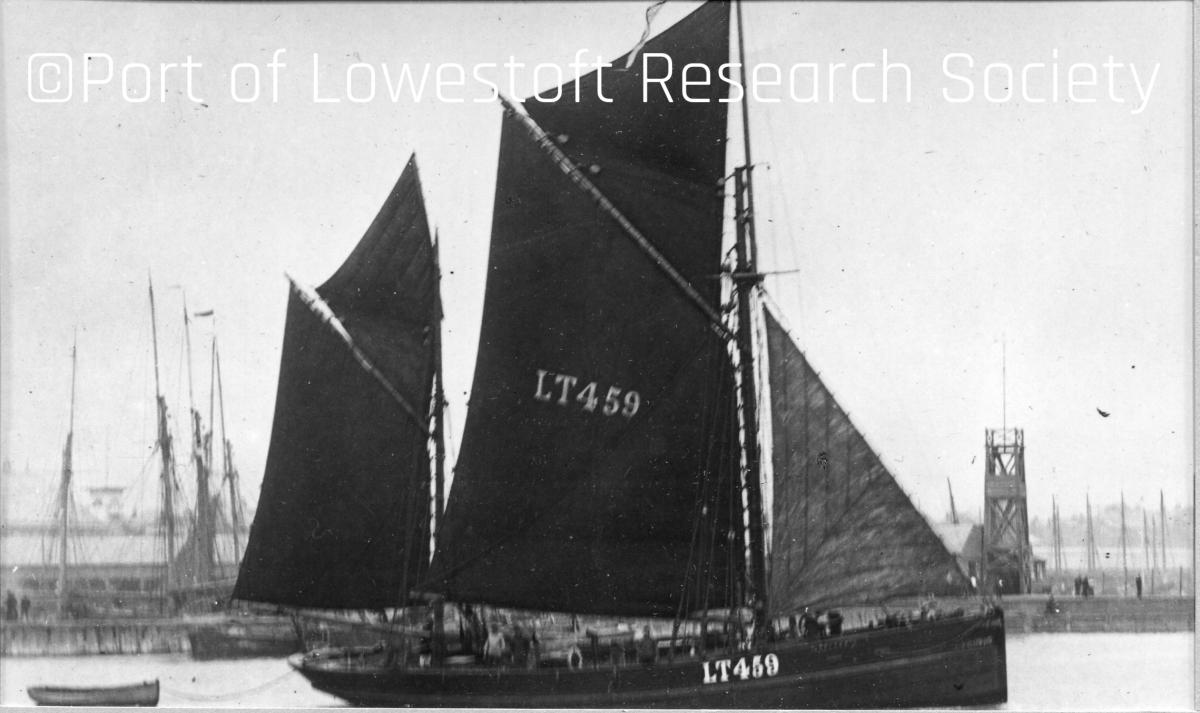
(LT 649)
If upon your port is seen
A little German submarine,
Do not fire shot nor shell.
Just turn around and run like hell!
(Fishermen’s parody of a navigation rhyme)
Throughout history, the fishermen of Britain and their ships have formed a ready-made naval reserve. The outbreak of the First World War found them at their peak, with nearly 100,000 men employed in the industry. Under contingency plans made a few years beforehand, 200 steam trawlers were immediately requisitioned for minesweeping and patrol duties – the first of the 3,000 fishing vessels to be taken into Naval service, both at home and abroad. Roughly half of the fishermen went with their ships into the Royal Navy, but the nation needed food and fishing had to continue as best it could. Those who stayed to fish lived no less dangerously than their colleagues in the Navy. The British fishing fleet suffered heavily at the hands of German warships and submarines and the price of fish (even in peace times an expensive one in terms of human lives) became even dearer. During the four year conflict, 670 fishing craft were sunk and 440 lives lost.
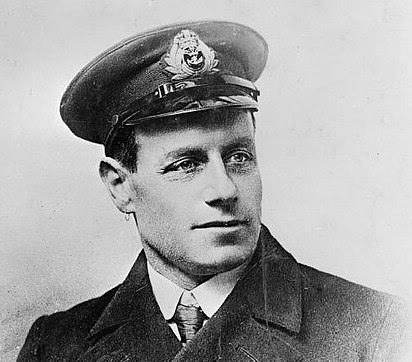
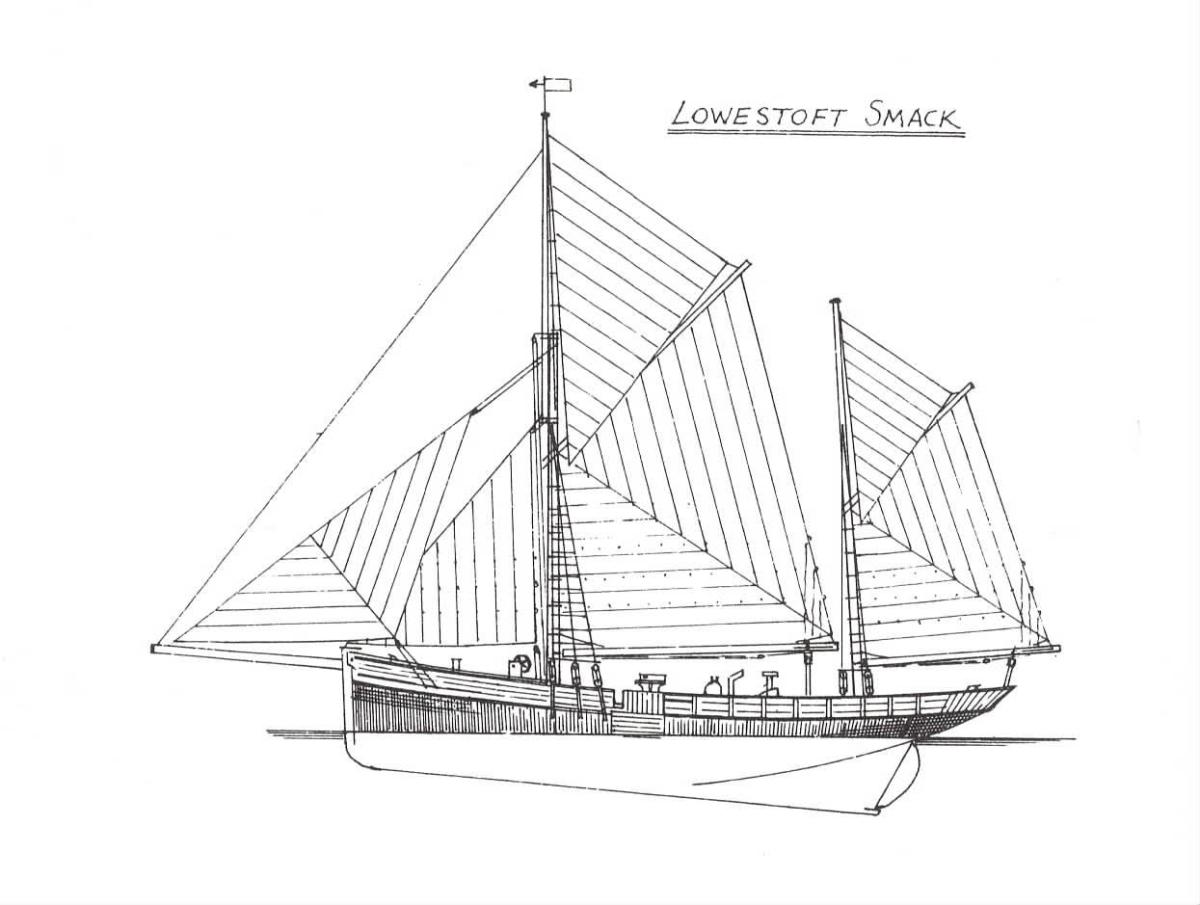
The trawlers and drifters requisitioned by the Navy were, of course, the latest and the best steam-driven vessels. It had no use for the hundreds of sailing trawlers, or smacks, then in use – but, events proved differently. A handful of Lowestoft sailing smacks eventually fought and sank a small number of German submarines in one of the oddest and bravest episodes in the history of fishermen in wartime. One Lowestoft skipper, Tom Crisp, even earned a posthumous Victoria Cross.
As far as can be ascertained, Lowestoft was the only fishing port to have armed sailing smacks – though steam fishing vessels were fitted with guns in a number of other places. The smacks were, of course, sitting ducks for German submarine commanders who did not waste expensive torpedoes on them. When a vessel was located, they surfaced near it, sent over an armed party in a dinghy, ordered the crew off into the little boat carried, took whatever stores and provisions they fancied, then left a small bomb on a time-fuse down in the chain-locker or fish-hold. The resulting explosion sent the smack to the bottom of the sea – by which time, the U-boat had often submerged and gone. Some incidents were of a less merciful nature. And the Fishermen’s Memorial in the North Aisle of St. Margaret’s Church (giving the names of those who died at sea, 1860-1923, in the course of their work), has no less than 55 names out of the 218 present recorded for 1914-18.
According to H.D.W. Lees, The Chronicles of a Suffolk Parish Church (1948), p. 64, the memorial (consisting of oak panels) was created in three phases: 1909, 1936 and 1944. Not all of the men named were lost as a result of enemy action and nor were all of the recorded vessels smacks – but a substantial number were. Tom Crisp’s name does not feature on the memorial and nor do those of the Nelson’s accompanying armed smack’s crew, the Ethel and Millie (LT 200), all of whom were lost during the same action. Which may have been due to wartime Naval secrecy surrounding the use of such vessels, often referred to as Q-ships: merchant or fishing vessels fitted with concealed weaponry, to encourage enemy submarines to the surface and give the armed craft an opportunity to sink them. But, even though not included on the St. Margaret’s Fishermen’s Memorial, Tom Crisp is honoured within building by having the seventh of the eight bells in the tower dedicated to him (H.D.W. Lees, p. 32).
One should not equate the First World War submarines with the sleek, high-powered predators which terrorised the Atlantic convoys during World War Two. The early U-boats were slow, somewhat cumbersome affairs, capable of carrying only a couple of torpedoes (but able to lay a dozen mines in addition) and equipped with a relatively light deck-gun. During 1917-18, the latter had been replaced in many cases by the metric equivalent of a four-inch calibre model. It was the comparatively puny armament and slow speed of the earlier submarines which convinced at least one Lowestoft smack owner that any meeting between fishing vessel and U-boat needn’t be completely one-sided. Fred Moxey had had enough of seeing his home-town’s craft getting blown up, so he suggested to the Naval authorities in Lowestoft that a few boats be equipped with guns in order that they might defend themselves in a manner which the enemy wouldn’t forget. The proposition wasn’t regarded seriously at first, but the continued sinking of fishing vessels persuaded the powers-that-be that there was nothing to lose by trying it.
To this end, four of the Lowestoft smacks, including two of Fred Moxey’s own – the G & E (LT 649) and Telesia (LT 1155) – were fitted out with three-pounders and they proceeded to give a good account of themselves. Under the changed names of I’ll Try and Boy Alfred (this being a ploy to confuse German naval intelligence) – and commanded by Royal Naval Volunteer Reserve skippers, Tom Crisp and Walter Wharton, they sank a German submarine, on their maiden trip together, on 1 February 1917. Crisp was awarded the Distinguished Service Cross (D.S.C.) for his part in the action (Wharton already had one from an earlier encounter) and prize money was given to both crews.
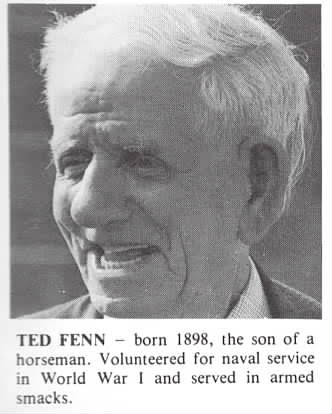
The men who remembered, first hand, this side-show action of the 1914-18 war at sea were few in number when this writer tape-recorded Edward “Ted” Fenn (1898-1983), retired farmer, on 20 April 1977. As a young man, he was cook on board the Nelson, on which Tom Crisp won his posthumous V.C. and he was also the last survivor of the action which, at one time in Lowestoft, was as familiar to local children as Horatio Nelson’s epic feats at Trafalgar. This is his account of the loss of the Nelson (formerly G & E - I’ll Try) and her sister-smack Ethel & Millie.
“I wuz workin’ on the land when war broke out an’ then I joined the minesweepers later on. I went in a Grimsby trawler, the Darogah (GY 191), an’ I suppose I wuz in her about a year – praps a bit longer. Then they started askin’ for volunteers to go in these four armed smacks in Low’stoft. I said to the skipper that I wun’t mind goin’ in one o’ them ’cause they were givin’ two shillins [2s] a day extra, danger-money. O’ course, you were sort o’ pirates, yuh know! An’ that wuz why there wuz that two bob extra. That wuz a right temptation, an’ bein’ so young an’ silly I dint really know what I wuz doin’. I’ve often thought about it since, though! Anyway, I joined this smack, the G & E, about the 25th o’ January 1917. Shev wuz layin’ up in Chambers’ yard [John Chambers Ltd., Harbour Road, Oulton Broad], hevin’ a better gun put on her – a thirteen-pounder, I think. That wuz on deck, but that wuz half camouflaged so you couldn’t see it from a distance. Once you were out at sea, you hed to fish. You wun’t really there after the fish, but you’d be usin’ an ol’ beam trawl.
“ O’ course, I dun’t know if you know, but before they hed the armed smacks these German submarines were sinkin’ the Low’stoft smacks hand over fist out on The Knoll [Smith’s Knoll] – an’ other places, as well. They’d come up alongside an’ order the crew inta the little boat, then git what fish they could, put a bomb down the chain-locker an’ blow the ship up. They dint waste torpedoes on ’em. No, they’d just come up alongside, like I said. I mean, they were only fishin’ boats; they couldn’t do anything. Well, that went on for quite a while an’ the smack owners, they began to git a bit concerned. See, they were losin’ so many boats. An’ I think it wuz Fred Moxey (though I can’t be sure) who went onta the South Pier to see Commander Bruce an’ ask him if some o’ the boats could hev a gun put aboard so they could try an’ protect themselves. Well, o’ course, the Navy men made a laugh o’ that, at first. I mean, they were reg’lar service an’ they thought it wuz no use putting’ a gun aboard a little ol’ sailin’ smack. But, anyway, the sinkins went on an’ they sent for Moxey after a while an' asked him if he still wanted to go ahid with his idea. He said yes, so this smack what I went on, G & E, hed it done. An’ so did about three more.
“Now, this thirteen-pounder gun they were puttin’ on her, when I joined, wuz a new thing out from what I understood about it. I think she’d hed a five-pounder or six-pounder afore that. O’ course, the steam drifters used to hev either three-pounders or six-pounders on the foc’sle hid [the covering above the small storage room located in the bows], an’ some o’ the big trawlers used to hev a twelve-pounder.
“Now, this new gun on the G & E, the muzzle wun’t above four foot long. I dun’t know much about gunnery, but they explained to me that wuz to stop the vibration, yuh see, to cut down the recoil. That wuz bad enough as it wuz. When we went to sea, to test the gun, I wuz down below an’ that felt as if we’d struck a blinkin’ mine! The soot come down the blinkin’ engine-room funnel an’ everything jumped up. But, anyway, she stood it well enough to do what we wanted. I dun’t know if they reinforced the deck or anything, but I know the little boat helped camouflage the gun. If I remember right, the little boat wuz put alongside the gun so you couldn’t see it from a distance. But, o’ course, when you started to use the gun you hetta open everything out. When you were fishin’, you hetta haul as best you could. ’Specially at night, ’cause you wun’t allowed a light. The idea wuz to coy the submarines up to yuh. Well, that wuz all right the fore part o’ the time – but, after one or two submarines had bin sunk, Jerry got wise over that an’ he wun’t comin’ up alongside no more. He wuz a-goin’ to try an’ catch yuh when you wuz too far orf.
“We actually went to sea in the G & E the end o’ January 1917 an’ we sank a submarine the first day o’ February. I shall never f’git our position: seventeen miles east-south-east o’ Low’stoft. I wuz down below, so I dint see a lot, but the crew said the skipper [Tom Crisp] wuz manoeuvrin’ us about on the motor. See we’d got a little petrol engine an’ they started that up. We were with the Telesia, though her name had bin changed to Boy Alfred at that time. Well, so hed ours. We were known as the I’ll Try ’cause the boat hed already sunk a submarine afore I joined her. They used to change the names reg’lar, yuh know, to confuse the enemy. Apparently, this submarine come up an’ give a burst o’ machine-gun at the Telesia, an’ you could see where the bullets hed hit all along the trawl beam. Then he went down agin. When he come up the next time, the crew said he wuz comin’ straight for us. They see him come straight up out o’ the water an’ they reckoned the shell from our gun hit the connin’ tower. An’, o’ course, there wuz oil an’ that all over the water, so that wuz a fair hit.
“Anyhow, after we’d done that, we put the dan overboard to show where the submarine wuz sunk [dahn buoyvertical marker, with pole and flag]. Then the ol’ man, the skipper, he say, ‘We’re goin’ to Southwold to bring up under the land for the night.’ On the way there, we met some P-boats, fast submarine chasin’ jobs – somethin’ like a frigate. One of ’em headed right for us an’ I can picture her right now. Cor, she wuz a-steamin’! You know, frothin’ at the bows. An’ when she got near enough, the captain or whatever he wuz spoke from the bridge through this megaphone. ‘Where’s the submarine, skipper?’ he say. Tom Crisp say, ‘Oh, we’ve sunk him.’ ‘Hev yuh?’ say the officer. Then he say to the matelots, the sailors what were there, ‘Give three cheers,’ he say, ‘for the ol’ Low’stoft smack!’ I can remember that as well as can be. An’, o’ course, I felt as big as two people.
“Well, when we got Southwold, we brought up for the night an’ I can remember about a foot o’ snow on the ground when we got inta Low’stoft the next day. We come in on the Sunday afternoon an’ we went an’ laid in the Yacht Basin. Then we hetta all go up onta the South Pier an’ say what we knew about the submarine business. Well, I dint know much about it really ’cause I wuz down below. But, I knew that there wuyz a thousand pound reward [£1,000] for sinkin’ a submarine. So, I thought to m’self, ‘Cor, I shall hev about ninety pound’! [£90] Yeah, I thought my share’d be about ninety pound an’ I thought the skipper’d git about a hundred an’ twenty [£120] or a hundred an’ thirty [£130]. I wuz the cook. There wuz nine of us in the crew altogether, where a smack wun’t only built for five. I wuz the cook, an’ apart from me there wuz the skipper, the mate, the third hand, the deckie [deckhand], three gunners an’ the chap what looked after the motor. The gunners were Naval gunners; they come orf the Halcyon [Dryad-class torpedo gunboat, which had been converted to minesweeping]. They were volunteers an’ they’d done the same as me; they’d joined for that extra two bob [2s] danger money. Which they got on top o’ their two an ninepence [2s 9d] a day, or whatever it wuz. That extra two shillings went right through the ship.
“Now, there used to be an ol’ boy called Lomas, who used to watch the smacks in them days, an’ when we brought up in Harbour he come aboard an’ say, ‘You’ll git yuh submarine money t’morrer.’ I dun’t know how he knew, but we all thought, ‘Well, thass all right.’ Anyway, I got my duffle trousers on an’ went ashore thinkin’ I wuz in the money. Home I went to Lound an’ told my father all about it. I say, ‘We’re gorn to git the submarine money t’morrer. He say, ‘How much do yuh think you’ll git?’ So I say, ‘Well, accordin’ to what I’ve heard, that should be about ninety pound.’ He say, ‘Well, we’d better go an’ have a drink.” So we did. [At the Village Maid public house.]
“When I went down to Low’stoft the next mornin’ an’ jumped aboard the ol’ smack, all the blokes were arguin’ and goin’ ahid. They were in the cabin. Well, I wuz cook an’ I wun’t allowed to say right a lot [the cook often being the youngest member of the crew] – but, I stood there in the engine-room, which wuz next door to the cabin, an’ I say, ‘Whass the matter? Whass all this?’ One o’ the older chaps say to me, ‘We aren’t a-gorn to git our submarine money now!’ So I say, ‘Why not?’ He say, ‘Our skipper an the Telesia’s [Boy Alfred’s], they’re both bin up on the Pier, an’ the Telesia’s goin’ to git the thousand pound. We’re goin’ to git two hundred pound [£200] an’ an award for gallantry.’ O’ course, these Naval chaps were really put out an’, I mean, we were the one that sank the submarine. There’s no doubt about that. Anyhow, we hetta go up the Bank Chambers [fishing company offices on Waveney Road, opposite the Trawl Dock] at such an’ such a time – an’ I finished up gittin’ seventeen pound [£17], instead o’ ninety!
“Well, after that business, they changed our name from the I’ll try to the Nelson, an’ we went to work agin, yuh see, fishin’ merrily on until the summer frap. Well, o’ course, we got sunk that time. We met our Waterloo. He wuz too much for us. We couldn’t do nothin’; he had a four-inch gun. Or wuz it a 4.7? That wuz a lot bigger’n ours, anyway. O’ course, in betwin the February an’ the August we hed a nice little run. We never saw a submarine durin’ that time, so o’ course that gave me confidence. I thought that wuz money for jam. An’ another thing. The submarine we sunk in the February, he only hed a little gun. But this one in the August, oh dear, he wuz a different proposition.
“Now, I can’t give yuh the whole details o’ what happened, but we got sunk on the 15th o’ August, 1917. That wuz the afternoon an’ I wuz cleanin’ the fish for the next mornin’s breakfast. I’d done the washin’ up an’ squared up after dinner, an’ I wuz cleanin’ these fish when Tom Crisp, the skipper, come up an’ hed a look round. He say, ‘Fetch me the glasses.’ [Binoculars] So, I went an’ got ‘em orf the mizzenm’st an’ he hed a look through ’em. He say, ‘There’s a couple o’ submarines out there, I think’. An’ he kept lookin’ for quite a long while. Then he say, ‘Yes. Give ‘em all the down. Tell ‘em to be prepared for action.’ Well, my job in action stations wuz down below in the fore-peak [small below-decks storage space in the bows], where the ammunition wuz. We hed fifty rounds o’ these thirteen-pounder shells in boxes. I dun’t know whether there wuz four or six in a box. That wuz my job to pull them out an’ hook ’em inta two hook-ropes what had bin passed down from on deck. When I’d done that, the blokes pulled ‘em up.
“Well, I wuz a-doin’ that when this U-boat opened fire. An’ I can’t remember exac’ly, but I think that wuz round about the fourth shell what hit us on the starboard bow just above the water-line. An’ if that’d come just a little further for’ad – well, that’d bin me gone. I can still remember the water a-splashin’ an’ I can see the flash as well. Then that went quiet for a bit. Our gunners knew he wuz out o’ range an’ the skipper told ’em not to fire an’ to hang on for a while. Praps they might come a little nearer. But, o’ course, they dint. They started firin’ agin. There wun’t many shells come over, but one went through the mains’l, an’ we fired four or five rounds in reply. Well, our gunner said afterwards we fired about four or five. The next thing I remember is one o’ the blokes sayin’, ‘They’re killed the skipper!’ O’ course, we were fightin’ a losin’ battle. This shell hit the skipper direct. He wuz standin’ at the tiller, when that come over an’ that nearly cut him in half. I can picture him layin’ there now. That hit him an’ went right through the port quarter.
“Well, there we were – the ship sinkin’ an’ the skipper done for. He wuz still conscious, though, an’ he said to his son, Young Tom, who wuz mate, ‘Abandon ship. Throw the books [log books] overboard an’ throw me over after ’em.’ O’ course, you hed these confidential books an’ papers – or, the skipper did, an’ he dint want ’em to fall inta enemy hands. An’ the blokes told me afterwards that that wuz what he said: “Throw the books overboard an’ throw me after ’em.’ Well, o’ course, Young Tom wanted to git him inta the little boat, but he wun’t let him, so we left him on board in the end.
“We launched the little boat when I’d come up from the ammo room. Then I went down inta the cabin. Somebody told me (I forgit who it wuz) to git the tea-kettle [a large utensil] full o’ water. I went down inta the cabin an’ the water wuz up to about my knees. I just managed to git the kettle under the tap, an’ I filled it up an’ took it back on deck. Then Rosso, the gun-layer [man responsible for aiming and firing the weapon], he got one o’ the pigeons [named Red Cock] out o’ the little boat. See, we hed this coop o’ pigeons for messages. Him and me went back down the cabin an’ on the table wuz this special paper. I remember him writin’ on there – ‘Armed smack Nelson attacked by submarine, Jim Howes Shoal Buoy.’ Thass near the Leman Bank, about fifteen mile north o’ Smith’s Knoll.’ [Europe’s premier autumn herring ground, off the north-east coast of Norfolk.] Thass were we’d bin fishin’.
“I actually held the pigeon time he writ the message out. The he stuffed the paper through the ring on its leg an’ let it go. Well. O’ course that blinkin’ bird dint go straight for home! That went orf an’ lit on some smacks what were fishin’ at The Knoll. Anyhow, they scared it orf an’ that did eventually come to Bagshaw’s lorfts (I think it wuz Bagshaw’s). Anyway, they got the pigeon an’ the message went round Low’stoft, so they sent out two boats to look for us. They were somethin’ betwin a light cruiser an’ a destroyer, an’ they were stationed at Low’stoft. [Smaller vessels than this, being torpedo gunboats.] There wuz the Halcyon an’ the Dryad, an’ they sent them out to look for us. That wuz about three o’ clock on the Wednesday afternoon when we got in the little boat an’ pulled clear. An’ o’ course, Jerry wun’t very partic’lar. There wuz a few shells droppin’ around after we’d got orf. Well, he’d fired on us first of all ’cause he knew we were an armed smack. Yes, he knew what we were all right.
“Then, as luck would have it, that come over a thick fog. One o’ them sea mists you git in the summer. That wuz a miracle, wun’t it? We were a-dodgin’ around, an’ we could see this submarine, but he couldn’t see us. Our partner wuz the Ethel & Millie at this time. When we sunk that submarine in February, they commandeered four more smacks an’ hed a reshuffle. So, instead o’ us bein’ with the Boy Alfred, we were with the Ethel & Millie. Well there we were, in the little boat, an’ Jerry knew we couldn’t git far, so he concentrated on the Ethel & Millie. The last we see of ’em, he wuz moored up alongside her an’ we all thought he wuz a-gittin’ some fish out. The crew, Johnsey Manning [Charles Manning, the skipper] an’ them, were lined up on the submarine’s fore-deck. Well, then that come over really thick an’ we never see no more o’ the Ethel & Millie. An’ yit did anybody else! No doubt Jerry destroyed her somehow. An’, o’ course, the worst thing about it wuz we never heard no more about the crew. I’ve got a photograph o’ them hangin’ up in my garage now.
“Like I say, that wuz three o’ clock on the Wednesday afternoon when we got in the small boat, an’ we were dodgin’ around till next mornin’. Then we thought we’d start to make for Low’stoft. We’d got the ol’ compass from orf the Nelson, lifted it out [from the binnacle] an’ put it in the little boat. But the action o’ the little boat wuz too quick for it. Too much jerkin’ about. But we did hev the North Star, an’ we rerckoned that if we kept that on the starboard [right-hand] bow we’d be headin’ westward an’ comin’ somewhere towards land. Each of us took turns on the oars, an’ the ol’ boat wuz leakin’ like a sieve ’cause she wuz only built for five an’ there wuz eight of us in her|! So, there wuz one of us a-balin’ water out an’ two a-pullin’ on the oars. The rest laid down an’ tried to git a little bit o’ sleep. We were like that two days an’ two nights. Then the ol’ Dryad picked us up – one o’ the boats I wuz tellin’ yuh about. They’d got the message, I spose, an’ come out lookin’ for us.
“Afore they come along, we sighted this buoy. Well, we thought that wuz one’ the buoys layin’ by the Haisbro Sand, but when we got near enough we could see it wuz the Jim Howes Shoal Buoy! We’d bin pullin’ two days an’ two nights an’ we were still in the same place! The buoy wuz a cage buoy an’ that used to hev a bell in it. [A cage buoy had a rounded body, surmounted by a tapering conical cage containing a bell.] But they’d took that orf durin’ the war an’ took the name orf. We knew it, though, an’ any ol’ fisherman’ll tell yuh where it is. Anyhow, some of us wanted to keep pullin’ an’ some wanted to make fast to the buoy. In the end, we pulled up to it an’ decided to git the painter [rope or strop secured to the bows of a boat and used for mooring it] an’ tie up to it. That way, we could at least git some rest from rowin’. Well, young Tom Crisp, our mate, he jumped aboard the buoy. [Later awarded the Distinguished Service Medal.] You can just imagine how big they are – but, he managed to git on it. The only trouble wuz that the painter dropped in the water. There wuz a strong tide a-runnin’ an’ we started movin’ away like anything. We pulled an’ we shoved an’ we just managed to sling this rope. Tom got hold of it an’ tied it round the buoy, an’ thass where we hung. Tom wuz on the buoy an’ us other seven were in the little boat. She hent got much more’n about a foot freeboard an’ she wuz leakin’ an’ all.
“We hed sin some minesweepers on about the Thursday an’ we tried to attract their attention, but that wun’t no good. We made fast to this buoy about noon on the Friday an’ there wuz a real tide runnin’. Thass a marvellous thing that dint pull the stem [the bow’s vertical timber] out o’ that little boat. I very orften think o’ that. You know, seven men in her an’ that tide a-runnin’. That could ha’ pulled the stem out or broke the painter. But, anyway, after a bit we all see this smoke an’ all see this ship. An’ as she come nearer, we could see that wuz a warship. So Rosso, the gun-layer, he could semaphore an’ he got up in the boat an’ semaphored ‘Crew o’ the Nelson’. Well, this ship come steamin’ up an’ young Tom Crisp managed to jump aboard her. He jumped inta the bight [curve] o’ the anchor chain where that come out o’ the hawse-pipe. The anchor wuz up on deck, yuh see. Yeah, he wuz the first one what got aboard. Well, o’ course, when they got further along, they put the steps down so the rest of us could git up.
Well, when we got on board, the sailors reckoned that wuz a lucky thing for us that they dint put a shell into us! I mean, when you come to think about it – a buoy sittin’ there an’ the this boat hangin’ from it. That looked like a submarine to them. At first! They thought that wuz the submarine what’d done the damage an’ they were very near puttin’ a shell into us. Well, it they hed ha’ done, that’d bin it! But, anyhow, they brought us inta Yarmouth Roads [inshore reaches], anchored there an’ signalled ashore for a boat. They sent out the Chris (SN 118), a North Shields drifter. She wuz one o’ the patrol boats stationed at Yarmouth an’ she brought us inta Low’stoft. I hent even got no boots on. I’d slung them orf when we abandoned ship. When we got in, the word hed got round that we’d bin sunk an’ people knew that we were in great difficulties. The only lucky thing wuz that we wun’t due in till Friday anyway, so we wun’t over time. The butcher what used to go out inta the country, Cullen, he hed little ol’ toshers [small three-man sailing smacks] as well, so he knew all about it when he went round that week. But, o’ course, he dint say nothin’ to my fam’ly.
“After we got sunk, we all got about nine or ten days leave. Survivors’ leave, they called it. The we hetta report back to work. We hetta report down at Phillips’s Stores. That wuz a place up-through-bridge. You got at it from Commercial Road, near the dry dock, an’ thass where the minesweepers an’ the patrol boats got their provisions from an’ all that sort o’ thing. Well, the blokes there used to make it nice for us. The butcher, he wuz a marine, an’ he used to see that we got good meat – so, we used to see he wuz all right for fish. Then we used to come in for all the seasonal stuff, fruit an' vegetables an’ that sort o’ thing. So we used to live pretty well. Then, when I went down there one mornin’, they said we’d all gotta report on the South Pier an’ see Draftin’ Officer West. He wuz a Fleet Reserve man [Royal Naval Reserve] an' he used to do all the draftin’, findin’ crews an’ that. Well, he told me that I’d gotta go to Chatham Barracks an’ that all the rest o’ the crew hed gotta go to Kirkwall, in the Orkneys. An’, o’ course I wuz really disappointed about that. But that wuz what happened an’ I finished up at Malta in the end [on the Mediterranean Patrol].
“Now, on the armed smacks you wun’t allowed to go near the boat wi’ uniform on.. That’d give the game away. So I went to Long, the fishermen’s outfitter [130 Bevan Street] an’ got two pair o’ duffle trousers (all the fishermen used to wear ‘em), a jersey an’ a wrapper [neckerchief]. I thought I wuz ever so clever! Then I went to Saunders [9 Bevan Street], who used to make the fishermen’s boots – the leather ones. I’m not talkin’ about the long sea-boots, but the little ones with the high heel an’ the fancy toe-cap. You know, like with the pattern of a heart or an anchor. Yeah, I got a pair o’ them, for best. Well, when we went away on that last trip, I left my ordinary boots, my navy boots what’d bin dished out from stores; I left them behind to hev suffin done to ’em. So, the day we got sunk, I hed these bran’ new boots on an’ they were lorst wi’ the ship!
“The owners o’ the armed smacks got charter money from the Navy, but they dint git the money from the fish what were caught. We were fishin’ for the Gover’ment, an’ that fish wuz sold on the Market [Fish Market]. an’ we dint git the money for it. Mind yuh, we used to git a good bit o’ stockie. That used to work out about ten bob a week [10s] wi’ the gurnards an’ all the small stuff we were allowed. [Stockie, or stocker bait, was the money made from the sale of less commercially valuable species, such as gurnards and greater weevers, and from under-sized “regular” ones. It was a standard means of supplementing wages.] We used to be at sea about six days an’ our actual wage wuz 3s 6d a day. Thass what all deckhands on minesweepers an’ patrol boats got. But we got this extra two shillings danger money as well, so I wuz gittin’ 5s 6d a day. Well that wuz the enticement. Yis, that wuz what I wuz after. I wuz thinkin’ more about that money than I wuz about anything else. But I dint really realise what I wuz goin’ on, bein’ young an’ inexperienced. Our lot used to be known as the Trawler Section. We hed a badge with RNR [Royal Naval Reserve] on it an’ underneath a T for Trawler. They used to call us Harry Tate’s Navy. These Fleet Reserve chaps we hed with us orf the Halcyon, they only got 2s 9d a day, plus the two bob danger money, an’ that wuz a bit of a sore point with ’em. See, I wuz better orf than them an’ I wuz only a kid. Mind yuh, they used to git the stockie bait. That used to be shared out all round the crew.
“Like I said, you’d be out for about five or six days an’ then in for two or three. We dint see that many mines, yuh know. You’d see the odd one afloat, but not many. One o’ the biggest problems wuz hevin’ nine people on board. There wuz only five bunks in an ol’ smack – one on each side o’ the cabin an’ one across the stern. Well, o’ course, when that come to it, there’d be one or two of yuh on watch an’ one or two of yuh doin’ suffin else. So, there wuz enough bunks for everyone, really. Once you’d shot yuh trawl, you used to lash the tiller an’ tow along. Then, when the skipper thought you’d towed long enough, he’d come an’ call yuh out. ‘Haul King George’s trawl!’ he’d holler, an’ you’d all turn out. O’ course, if that wuz dark, you wun’t allowed to show a light, yuh know. But you got over it somehow. My job wuz down below, a- coilin’ the trawl-warp [thick rope which pulled the gear along]. Coilin’ the trawl-warp, yeah. That wuz a rum job, too. The cold water’d be a-runnin’ down yuh arms. I never had anything to do with shootin’ the trawl, though. I’d turned in then. I dint hev anything to do wi’ that.
“One good thing on board wuz the grub we used to git. Like I told yuh, bein’ friends wi’ the people at Phillips’s Stores saw us all right. An’ we used to git jolly good fish breakfasts on board, as well. The there wuz the mess savings we used to git. We used to be allowed so much for victuallin’, an’ if you dint spend all your provision allowance, you used to git the difference back as mess savings. An’, o’ course, bein’ well in at the stores, we could allus keep under our allowance. Sometimes you might make about half-a-crown [2s 6d] or three bob [3s] a trip, so we were in clover all ways. Oh yeah, I used to do very well when I wuz in the Nelson. Well, like I told yuh, I joined in the first place for that extra two bob a day. The only thing wuz I dint really see the danger. That wuz all nice an’ easy till we got sunk!”
• This article, with necessary adjustments in places, was first published in 1980 as Chapter 3 in this writer’s book The Trawlermen – titled “Haul King George’s Trawl”.
• The transcription of the tape-recording is written in the local dialect, as spoken, for authenticity and in as near a form as possible to its original delivery.
• Use has been made of italic font in places to highlight key words and phrases, or those of a specialist nature.
• Square brackets feature to give the meaning of particular parts of the text which may not be generally known.
• Harry Tate [ref. Harry Tate’s Navy] was the stage name of a Music Hall comic entertainer, Ronald Macdonald Hutchison (1863-1940), whose act was that of someone bemused and overcome by complex gadgets. Thus, it became associated with amateurishness and was applied to the fishermen who formed the main element of the minesweeping and patrolling services in WW1 and WW2. It made the distinction between them and regular Naval personnel.
• The first action at sea, of 1 February 1917, was more complex than what is described above. There were two submarines involved and one of them was sunk by the Boy Alfred before the I’ll Try engaged with the other. The shot which hit the conning tower, as described, was not a fatal one and UB-6 (as it was) was able to submerge and return to base.
• All of this writer’s tape-recordings (running to 102 hours, in all), covering various aspects of the Lowestoft-area fishing industry c. 1910-60 – together with their hand-written transcripts – form part of the Suffolk County Oral History Collection and have been digitised for permanency. The work of recording was carried out February 1976-November 1983.
CREDIT:David Butcher
United Kingdom
Add new comment