
1900s
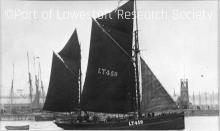
(LT 649)
If upon your port is seen
A little German submarine,
Do not fire shot nor shell.
Just turn around and run like hell!
(Fishermen’s parody of a navigation rhyme)

Tape-recordings made 1976-83
The recordings were made with local people, with the intention of producing a sound archive to record an important part of the Lowestoft area’s industrial and maritime history. They form the basis of six published works: The Driftermen (Reading, 1978), The Trawlermen (Reading. 1979), Living From the Sea (Reading, 1982), Following the Fishing (Newton Abbot, 1987), Fishing Talk (Cromer, 2014) and The Last Haul (Lowestoft, 2020).
Added: 11 March, 2026
“I know not whether laws be right,
Or whether laws be wrong.
All that we know who lie in gaol
Is that the wall is strong;
And that each day is like a year,
A year whose days are long.”
(Oscar Wilde: “The Ballad of Reading Gaol”)

[First published as the last chapter in the writer’s book The Last Haul (2020).]
Were you ever down the Congo river?
Blow, boys, blow.
Where the fever makes the white man shiver.
Blow, my bully-boys, blow.
(Traditional American capstan song: Blow, Boys, Blow)
Added: 25 February, 2026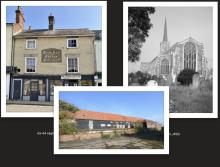
In some ways, buildings are every bit as much historical documents as written sources and can inform the observer of many aspects of human activity in days gone by. Where they have survived in original form, they have much to say of former economic and social conditions – be they domestic, ecclesiastical or industrial in nature. And, if altered and converted at different times, there is just as much to be learned from them. Let us take three of Lowestoft’s buildings, covering these three categories, and consider each one of them in turn within its context.
Added: 18 September, 2025
May 1535 - Muster Roll of Lothingland Half-hundred, dated 23rd of the month, listed and named 292 able-bodied men for its defence. Lowestoft provided 130 of these (46%), with three widows included for their late husbands’ weapons. Armaments consisted mainly of bills (a hatchet-like metal attachment on the end of a pole) and bows and arrows, with a minority of the men also possessing helmets and body armour. No firearms are recorded.
Added: 14 April, 2024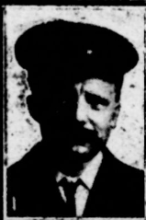

As part of our tribute to those Lowestoft people who died because of two World Wars. We came across 13 Clemence Street - perhaps the most unfortunate wartime address in Lowestoft?
Added: 10 October, 2023
A Millenium Heritage project from 1999 has been restored and saved by LO&N. It can be viewed here and even has its audio files updated to a current (playable) mp3 format as can be seen/heard here
Added: 6 October, 2023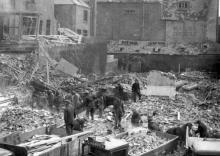
Lowestoft’s worst raid of world war II 80 years ago today on 23 January 1942, while convoys of lorries were still trucking the wreckage and rubble from the scene of devastation that became known as "The Waller's raid" in London Road North, Lowestoft, another deadly raid occurred. An alert had been sounded at 8.41 am, probably caused by German bombers seeking a convoy in the North Sea. Barely a minute had elapsed after the warning when a lone bomber, variously identified as as a Do 217 or Ju 88 emerged from the snow clouds overhead and dived towards the railway station from the NE.
Added: 23 September, 2023