
ENVIRONMENT
1778 A 'spangle light' was tested for one night on Lowestoft Low Light by several Trinity Elders sailing out to sea. The design was never permanently used. A many-signed letter said the new light was 'constant, certain and regular', and seen from a greater distance than the coalfired light. In February 1779 a 'small reflector was ordered to be fixed to a triangle or beacon'. In September 1779 '...a Mr Smith was paid £6.5.o for a plated reflector, lamp and fountain'.
Added: 23 September, 20231881 Low Light now also flashes. And had to be moved 80 yards inland, because of erosion.
Added: 23 September, 20231872 - 74 The present High Light was built. It had a new optical revolving light, flashing at half-minute intervals.
Added: 23 September, 20231974 the High Light is now fully automatic.
Added: 23 September, 2023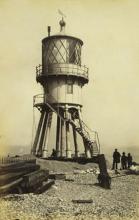
1923 Low Light extinguished, as the Stanford Channel was no more.
Added: 23 September, 2023
Use It All Collection points: First Friday of the month - Triangle Market Place; first Saturday of the month: Compass Street.
Tetra Paks and crisp packets and batteries and medicine blister packs and flimsy plastic and bras and toothbrushes and Pringles tubes and more...
Though most of these you can recycle yourself - batteries at supermarkets, flimsy plastic at supermarkets, blister packs at Superdrug. Check out our recycling map
Added: 23 September, 2023

Discussing Lowestoft’s win of the “street that Saved’ competition
Added: 23 September, 2023
Next Collection Days are Friday 4th Febrary and Saturday 5th February at 141 High Street (opposite the old Barclays Bank building).
Remember that you can take things like bread bags (flimsies) to most major supermarkets. Batteries are collected many places. Medicine blister packs can go to Super Drug in the Britten centre. Contact lens to Boots Opticians. Please wear a mask when inside 141.
Look forward to seeing you.
Happy New Year.
Added: 23 September, 2023