
Lowestoft’s Nearest Neighbours (Earliest Recorded Details)
1. Gunton
This community did not exist as such at Domesday (1086) and does not appear in surviving documentation (as Guneton) until 1198 – in Feet of Fines material – when William de Heming and Richard de Guneton were engaged in dispute or negotiation of some kind over the ownership of land. The name derives from two elements: Gunni (a Scandinavian personal name) and tūn (Old English, meaning “homestead”), which means that a local family of Nordic origins – perhaps even going back as far as the invasion of England by the so-called Great Heathen Army during 865-7 – gave its name to this particular community. It must, at some stage, have built up a sufficient holding of land locally to form an independent entity and, during the century following Domesday – a period of great political, socio-economic and religious change – achieved this status. Which was assisted by some kind of land-share arrangement involving Corton (to the north) and Lowestoft (to the south).
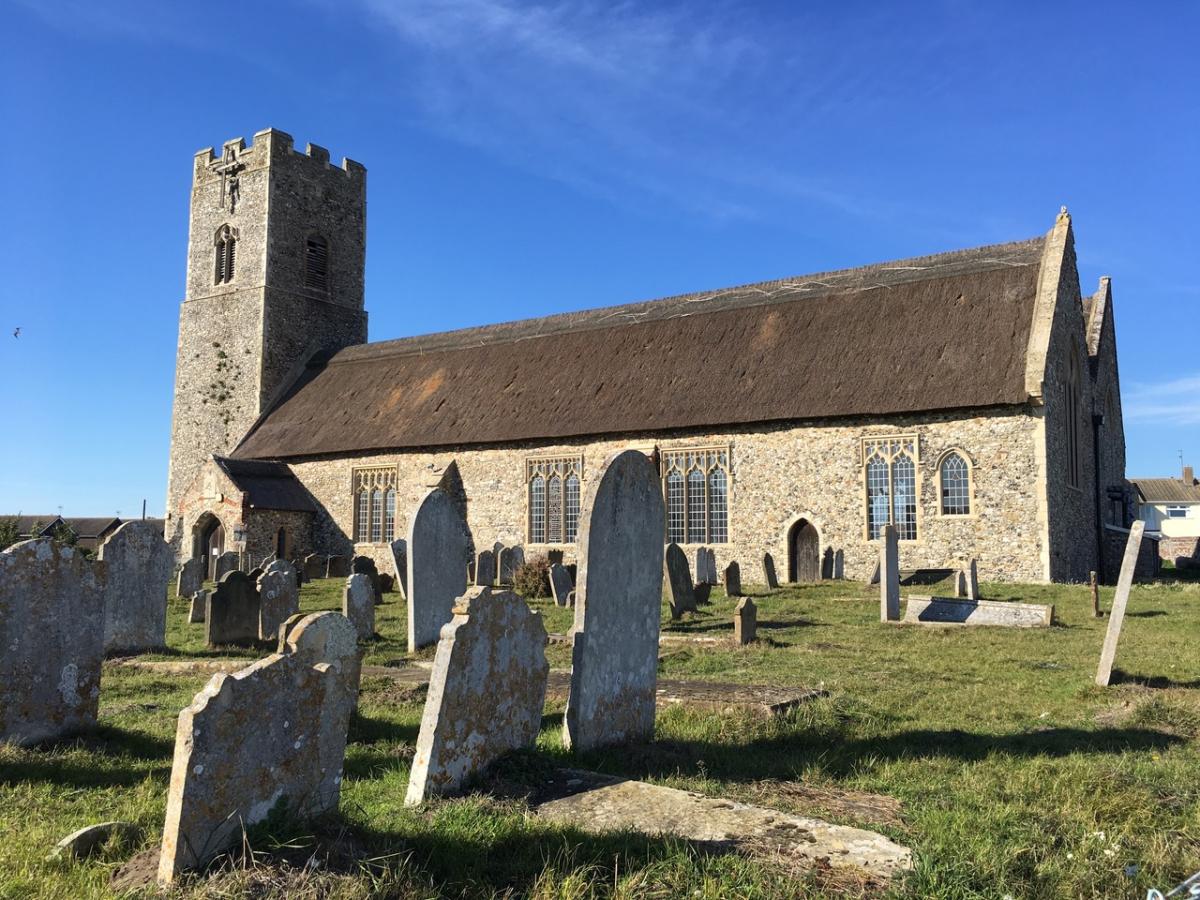
Corton surrendered a large portion of its southern area of coastal heath, with the road known as Long Lane then forming the original northern boundary of Gunton. Long Lane runs in a dead straight east-to-west line (which shows that it is an arbitrary creation) and its surviving northern hedgerow has eight to ten native hardwood species along its length, making it around 900 years old. Lowestoft divested itself of a portion of its northern heath (or had it taken) and the original boundary-line – though not as obvious as the Corton limit – is still discernible. It consists in the form of a back-way to the rear of the houses on the north side of Lyndhurst Road, which runs dead in line with Station Road and once continued straight across what is now allotment land next to Ormiston Denes Academy. And what, therefore, of the mid-point? Dead straight, again, and known as Hubbard’s Loke. And where does this end? At the Norman era parish church of St. Peter. And what once stood to the rear of this in the Stubbs Wood area? Gunton Old Hall (demolished in 1967), site of the original manor house when Gunton eventually achieved such status. W.A. Copinger, The Manors of Suffolk, vol. 5 (1909), p. 40, states this to have been during the reign of Henry I (1100-35) – but, that does not sit easily with a first recorded documentary source of 1198.
2. Oulton
Oulton, also, did not exist at Domesday. It developed from the largest and most populous of the Lothingland Half-hundred communities known as Flixton (Flixtuna), which had 1,085 acres of arable land (one 360 acre manor and a 360 acre freeholding connected with it, another manor of 240 acres with attached 5 acre freeholding, and a charitable endowment of 120 acres belonging to a church. The adult male head-count came to 25 freemen, 4 villans (senior level of serf), 34 bordars (smallholder serfs) and 4 slaves (landless). The church with the attached charitable holding of 120 arable acres, worked by 8 bordars, was one of the ten richest places-of-worship in Suffolk. The other four units were manned as follows: 360 acre manor (I freeman, 2 villans, 14 bordars and 4 slaves); 360 acre freeholding connected with it (21 freemen and 6 bordars); 240 acre manor (1 freeman, 2 villans and 6 bordars); and 5 acre freeholding connected with it (2 freemen). The overall number of adult males, standing at 67, was far in excess of the number of 45 located in Gorleston (made up of 24 freemen, 12 villans, 5 bordars and 4 slaves), which was the hub settlement of the Lothingland Half-hundred manor itself. So was its area of cultivated land at 1085 acres, compared with Gorleston’s 810.
The Flixton church (later to become that of Oulton) was rebuilt in cruciform Norman style during the post-Conquest period, probably retaining its original dedication to St. Michael. Only two other Lothingland communities are listed as having churches at Domesday: Burgh Castle and Somerleyton, with the added presence of a priest noted at Akethorp (next to Lowestoft) as indication of the presence there of a Christian congregation of some sort – but one not having a church building. The one at Somerleyton later became the Church of St. Mary, Blundeston – this community, again, being one not recorded in the Domesday Survey and created later from major boundary changes made to Somerleyton, Lound and Corton.
At the time of Domesday, a small 45 acre manor (and separate freeholding of 15 acres) called Dunston was situated somewhere at the top of the Gorleston Road area, as it now is – possibly not all that far from its junction with Hall Lane and Somerleyton Road. The place-name probably derived from Old English dūn, meaning “hill”– thus accounting for the upward slope of the land – and tūn, meaning “homestead”. The manor was held by a freeman called Ali – with this being another personal name denoting Scandinavian origins – who worked it with the help of one bordar (smallholder). And, as was the case with Gunni (in Gunton), the family-group seems to have blocked up enough land over the years following Domesday to have a new community named after it – Oulton first appearing in surviving documentation as Aleton (in 1203) in Curia Regis records, these being connected with the proceedings of the King’s Court itself.
The arrival of this new entity resulted in the progressive decline of Flixton, which finished up as the smallest of the Lothingland parishes (602 acres) located between Oulton and Blundeston, and with its own church of St. Andrew – destroyed and left in ruins by a hurricane in the year 1703. Oulton became a settlement with two Late Medieval manors, located at either end of the parish: Oulton Hall to the south and Houghton to the north. The former probably developed from one of the two manors recorded in Domesday (360 and 240 arable acres, respectively) and the latter from that connected with Dunston. No positive documentary source(s) point to this, but the local topography suggested in the Domesday Survey itself is certainly a possible indicator. The manor of Houghton had the grant of a weekly market and annual fair made to it in 1307 – just one year before Lowestoft received the same privileges. And its lord also appointed clergy as parish priests at St. Michael’s Church.
3. Oulton Broad
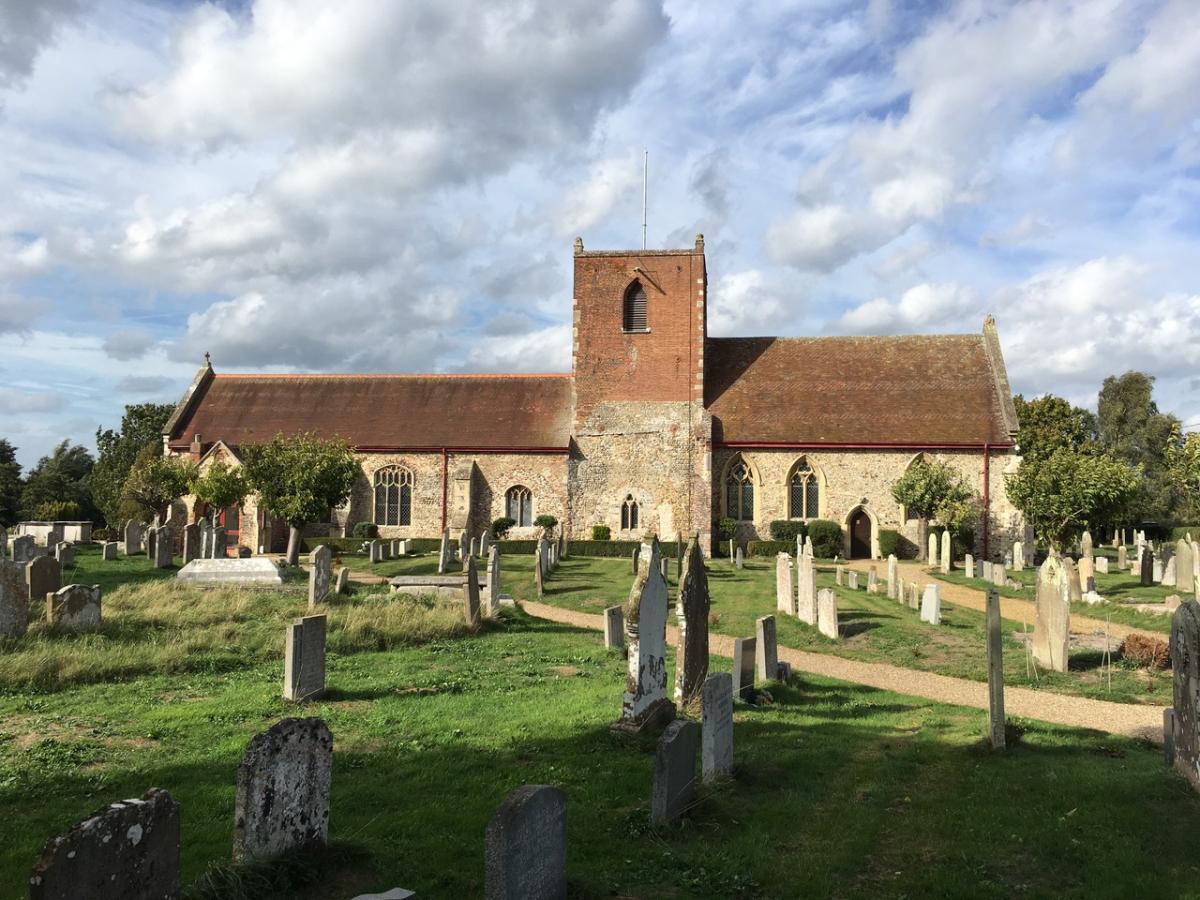
Created in 1904 as a new civil parish in the Lowestoft area, for electoral purposes, as the result of population growth driven by the town itself – its population in the 1901 Census Return being 23,385 in number, as contrasted with 6,781 in 1851. By 1911, it had risen to 37,886! The new entity was given the name of the stretch of water (a former, large, Late Medieval peat-digging) which separated its two halves: Oulton to the north and Carlton Colville to the south. The waterway being made part of a navigation route to Norwich, during construction of Lowestoft Harbour (1827-30),had resulted in a number of houses and other related buildings in the Mutford Bridge area – especially along the east side of what is now Bridge Road, opposite Nicholas Everitt’s Park. And, with the later development of Victoria Road increasing numbers further, a chapel-of-ease for the Carlton Colville parish church of St. Peter was built in 1884 on land donated by George Edwards, Superintendent Engineer of Lowestoft Harbour, who lived close by. This building became St. Mark’s Church, Oulton Broad,
twenty years later and the Carlton Colville Railway Station, first and last-stop-but-one on the line to and from Ipswich (Samuel Morton Peto, 1859) became Oulton Broad South.
4. Kirkley
Found recorded in the Domesday Survey (1086) as Kirkelea, having 172 arable acres in three separate units (130 acres, 30 acres and 12 acres), worked respectively by 20 freemen, 6 freemen and 1 freeman. The first element of the settlement’s name derives either from Old English cirice or Old Scandinvian kirkia, meaning “church”, while the second is unequivocally Old English lēah, meaning “glade” or “clearing”. Which makes the topographical element neatly summarised as “church in a clearing”. No church, as such, is found recorded in Domesday – which may be down to clerical error of some kind or to the foundation not being active at the time (for whatever reason). But, there obviously was or had been a Christian congregation present at some point. It is just possible the 12-acre holding was, or had been, a Church endowment. The first documentary reference to the settlement, following Domesday, is found as Kirkelee in Curia Regis material (year 1200).
Apart from the place-name of Kirkley indicating the presence of a church, at some point, four other communities in Lothing Half-hundred (as it was termed in 1086 – later to become known as Mutford Half-hundred) had churches recorded. Barnby, Mutford, Pakefield and Rushmere are all named, with Mutford (hub of the Half-hundred manor) having two foundations. Thus, a half-hundred only half the size of its neighbour Lothingland, and with only eleven communities recorded as opposed to seventeen, had five to six churches – as opposed to three or four.
As well as the settlement of Kirkley itself, there was also a smaller neighbouring community called Wimundhall located close by. This had only 36 acres of arable land attached to it: 12 of its own (worked by 2 freemen) and 24 belonging to the community of Weston, near Beccles (no details as to workforce). The place name’s first element is the Old English personal name Wigmund, while the second is Old English halh, meaning “secluded place” or “nook”. With Kirkley having long formed part of the Lowestoft urban area, the secluded place or nook implied in the second element cannot now be definitively placed. However, it may once have existed to the north-west of the Church of St. Peter and St. John (a modern dedication in part, with the second name representing a former Victorian parish and church which have disappeared), on the lower ground towards Kirkley Stream.
The present-day Carlton Road, Kirkley Street, Enstone Road area offers a possible location, centring roughly on OS TM59 538919. It is still possible, even today, in spite of all the 19th and 20th century housing development which has taken place, to envisage a “de-urbanised” environment and see something of basic land-forms that determined earlier settlement-patterns. The community was of sufficient note, in its time, to give its name to a local family, the de Wymundhales, members of which became lords of the manor of Kirkley – possibly from quite early on – and were granted the right of holding a weekly market and annual fair in the year 1271 (Alan de Wymundhale). They also held the manor of Brampton at the same time (as well as other estates), being named there in 1270.
5. Pakefield
The Domesday record for Pakefield (as Paggefella) reveals a small community of 61½ acres of arable land (30 acres, 15 acres and 16½ acres), with the first two units worked respectively by 6 freemen and 1 freeman. The third unit belonged to a church, with no workforce referred to – which probably means that the seven freemen listed provided the labour required. The specific reference in Domesday is to “half of a church” (dim. eccla. in the abbreviated Latin text) – with no definite interpretation of what this actually means, but which may have related to its establishment as a place of worship and the endowment of land accompanying this (the 16½ acres). Which would have created an income of some sort – this being wholly in the hands of the priest himself or shared with a patron, the latter of which appears to have been the case here.
The place-name Pakefield is of Old English or mixed origins, in deriving from either Pacca (Old English) or Pacci (Old Norse) in the first element and from Old English feld (meaning “open space” and suggesting a clearance of some kind) in the second. The Revd. Canon E.P.W. Stather Hunt – Rector of Pakefield, 1927-53 – in his book Flinten History, 7th ed. (1953). p. 64, makes reference to both market and fair in connection with Pakefield – but no official royal grant of either is to be found. The Church of All Saints & St. Margaret was once of dual nature, with its southern section dedicated to All Saints (and probably dating from pre-Conquest times) and the northern mediety to St. Margaret (a Norman naming). Which is all tied up in some way with the half-church referred to in the Domesday Survey.
Pakefield had two Late Medieval manors, named Rothenhall and Drayton (or Pyes) – with the former’s lord appointing clergy to All Saints and the latter’s to St. Margaret’s.
A wall inside the church, built into the central arcading, defined the building’s interior layout and use as two separate entities right up until 1748 when both of them were combined under one minister and the Church became a single foundation. The manor of Rothenhall took its name from a small, adjacent, coastal community located between Pakefield and Kessingland, which became split in half in the post-Domesday period, with its neighbours on either side taking the land and each having a manor named after it – a joint asset which seems to have been shared between the two.
Domesday Rothenhall (Rodenhala) had 70 acres of arable land in 1086, divided into two small manors of 30 and 40 acres respectively – the former worked by one freeman and five bordars (smallholders) and the latter by one freeman and four bordars. These units were probably the determining feature of how the land was divided post-1086 between the two communities on either side, but no hint of how and why it was done can be arrived at. The name Rothenhall possibly derives from either Old English rod or roÞ(u), meaning “a clearing”, or Old English HroÞ, a personal name (plus ing, which
indicates descendants) and Old English halh – meaning “secluded place” or “nook”.
This particular element having been noted earlier in the information regarding the Wimundhall settlement.
And Rothenhall was not the only local Domesday community (larger in terms of arable land and the number of adult males recorded) which ceased to exist in its own right and become part of Pakefield. This one was known as Beckton, which had 180 acres of arable land (freeholdings of 120 and 60 arable acres, worked respectively by 5 freemen and 6 freemen) and which has the origin of its place-name still visible. This is the watercourse generally known as either Kirkley Stream or Kirkley Beck, which rises in Carlton Colville, lying between the 25-feet contour lines and running into Lowestoft Inner Harbour to the east of Riverside Road (OS TM59 541924). Place-name derivation supports this, with the first element seemingly being Old English bæce/bece (meaning “a stream”) and with the second being of same origin from tūn (meaning “homestead”). The two Latinised spellings of the name to be found in Domesday are Bechetuna and Beketuna (different land-holders) – with use of the letter k perhaps suggesting the possibility of the first element having Scandinavian origins: ODan bæk or Old Norse bekkr.
A possible “core” location for the settlement itself is Grove Farm, Pakefield, at the junction of Bloodmoor Road and Stradbroke Road (OS TM59 525905). The site is a long-established one, with the present house dating from the late 16th-early 17th century. Although a great deal of 20th century housing development is in evidence in this particular location (to say nothing of a relatively new industrial estate and relief-road system), there are still a sufficient number of basic geomorphological features left to form an impression of a much earlier landscape. Creation of the Lowestoft southern relief road has revealed the presence of the watercourse (through following its alignment for part of the way) to a greater number of people than has probably been the case for a considerable number of years. A local family bearing the name of Beckton (usually rendered as de Beketon) is detectable in public documentation of the early 14th century, with one of them (named Hugh) listed as a Pakefield tax-payer in the 1327 Lay Subsidy.
So, how was Pakefield able to absorb two adjacent communities larger than it, in terms of the areas of cultivated land and the number of adult males engaged in working the soil? No definitive answer can be given, but it is possible that the presence of a Church (and its priest) played a part. This would have given the community a religious and social status (an authority, even) not available in the other two which enabled it – during the century following Domesday – to integrate half of one and the whole of the other into its own territory. Land-share agreements would have been part of the process, with the holders of the time probably seeing advantages to be had from absorption into its neighbour, with the Pakefield name itself (following Domesday) then featuring in Feet of Fines documentation for the years 1198 and 1228 as Pagefeld andPakefeld.
6. Carlton Colville
The sixth and last of Lowestoft’s satellites is found recorded in the Domesday Survey
as both Karletuna and Carletuna in the two separate entries referring to it (different land-holders). It had 540 acres of arable land (a 240 acre manor and 240 acre freeholding, and two much smaller freeholdings of 30 acres each) – with the manor worked by 4 villans, 4 bordars and 4 slaves and the other large unit being in the hands of 30 freemen. The manor would have had some kind of supervisory presence in charge of the bonded workforce, but this is not divulged. The other 240 acre unit is not classed as a manor, though sufficiently large enough to have formed one. The two 30 acre holdings were, respectively, in the hands of 2 freemen and 1 freeman.
The first element of the place-name Carlton derives from either Old Scandinavian Karla (a personal name) or a Scandinavian form of Old English ceorl (meaning “freeman”). The second is Old English tūn (meaning “homestead”). The addition of Colville to Carlton came about as the result of a family of that name acceding to the manor of Carlton Hall (probably a continuation of the 240 acre Domesday unit) with the 240 acre freeholding becoming the manor of Bromholm – belonging to the so-named Cluniac Priory at Bacton, up on the coast of North-east Norfolk. No year can be given for the de Coleville family’s acquisition of the manor, but Gilbert de Coleville (from the town of Colville-sur-Mer, in Normandy) had fought with William the Conqueror at Hastings.
The earliest record of this family’s connection with the manor of Carlton Hall comes in 1227, when Sir Robert de Colvile is referred to, and his son Sir Roger (surname spelled as Coleville) was granted the privilege in 1267 of holding a weekly Friday market there and an annual fair to take place on 11 November – the feast day of St. Martin of Tours (one of France’s national patrons). The de Colvilles retained their interest in Carlton until the mid-14th century, when it passed into other hands. But, their surname has remained in use right down to the present day.
United Kingdom
Add new comment