Celebrating Heritage, Promoting Our Future

Index to LO&N Historical Articles (David Butcher)

PicThe work carried out on Lowestoft, listed below, is an attempt to reconstruct the community by showing various aspects of its history in earlier times - mainly during the Late Medieval and Early Modern periods, but with a small number of departures from these into both the 19th and 20th centuries. The method has been to use a multi-source approach, whereby study and interpretation of the local surface geology and topographical features combine with a wide range of available documentation to produce as detailed a picture as possible of the town and its inhabitants during different phases of its past. The work is ongoing, even after more than fifty years of study, and can therefore be adjusted or added to as new information comes to light.
[ by TITLE ] | [ by DATE ] | [ RESET ]


1. A Lowestoft Deer Park (1377) Deer CREDIT:Bodleian Library
2. A Notable Rescue at Sea (1785) An original water-colour of John Money and his balloon in the North Sea’s waters was produced by Philip Reinagle. This was turned into an engraving, which was then printed in both colour and monochrome for general circulation. The image is accurate in its portrayal of the balloon's lines and the gondola’s boat-shape.
3. A Seaside Excursion (1797) front cover of Robert Paul’s little booklet
4. A Short-lived Parish Workhouse (1739) Two of the former almshouses in Dove Street, which stood next to the Workhouse and were demolished during the 1960s. Jack Rose Collection.
5. Accounts of the Administration of Thomas Mighells (1636-9) Thomas Snr., the father, was the son of James and Katherine Mighells
6. An Unexpected Royal visit (1737) Portrait of George II by Thomas Hudson (1744).
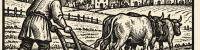
7. Animal Husbandry in Lowestoft (17th & 18th century) Animal husbandry
8. Apprenticing of Poor Children (1699-1730) Doc
9. Artillery Drill Hall, Arnold Street (19th century) Artillery Drill Hall
10. Battle of Lowestoft Medallion (1665) Medal
11. Beacon Stones (1552) Beacon Stones CREDIT:The Lowestoft Archaeological & Local History Society
12. Before There Were Banks (Credit Provision 1585-1730) 62 High St
13. Bequests for the Relief of Poverty, 1560-1730 poor
14. Brewing in Lowestoft (1560-1760) Beer
15. Churchwarden Accounts (1714-36) An ink-and-wash study of the Town Chamber (with Town Chapel to the rear), executed by Richard Powles in 1782. This was the town’s multi-purpose civic HQ until the Town Hall was built (1857-60), with the curfew bell hung in the cupola surmounting the roof. Suffolk Archives (Ipswich), 193/2/1 - the Isaac Gillingwater collection of illustrations (c. 1807).
16. Compass Street (14th-19th century) Compass st
17. Death on the Denes (1666) St Margarets church
18. Dickens, Lowestoft and David Copperfield (1849) Blundeston Church
19. Domesday Survey (1086) Domesday
20. Early Modern Lowestoft (Mid 18th Century) Ink-and-wash study of the High Street, produced in 1784 by Richard Powles, looking down Crown Score and revealing extensive east-side frontages to either side. One of the illustrations to be found in the Isaac Gillingwater collection of local views (c. 1807) - Suffolk Archives (Ipswich), 193/2/1.
21. Fishing and Maritime Trade (Late 16th-Early18th Century) Graphically enhanced images of trading and inshore fishing craft which feature on the “Martin Map” of c. 1580, showing the local coastline from Pakefield to Gorleston - Suffolk Archives (Ipswich), Acc. No. 368.
22. Fishing Seasons, Catching Methods & Curing (Mid 16th-Early 18th Century) pic
23. Founding of Lowestoft as Hluda’s toft (mid-late 500s) history
24. Freshwater Fishery (Late 16th-mid 17th Century) Mitford Bridge
25. Good Cross Chapel (Late 13th-Late 18th Century?) Pot
26. Great Plague of Lowestoft (1603) Death’s Dart - part of the grave memorial of Thomas Annot in St. Margaret’s Church, drawn and engraved by John Sell Cotman.
27. Hearth Tax of 1674 hearth tax image
28. High Street Buildings & Surviving Timber-Framing (15th-17th Century) pic
29. Historic England Building Listings: Additional Material listed
30. Historic Lowestoft Fires (1645, 1670, 1717 & 1780) fires
31. Historical Account of the Denes (14th-18th Century) 1870 Denes
32. House Design and Interior Arrangements (16th-18th Century)  pic
33. Human Migration into Lowestoft (1696-1735) boats
34. Hundred Roll of 1274-5 Leathes Ham - a flooded Late Medieval peat-digging
35. Illegal Goings-on in Kirkley Roads (14th & 15th Centuries) The “Ubena von Bremen” (built 1991) - a modern construction of a 14th century Hanseatic cog, found buried in the River Weser’s mud in 1962.
36. Industries Related to Farming – 17th & 18th Century Site of Lowestoft’s first windmill: top of the slope in the Hill Road/Halcyon Crescent area.
37. Interior Décor, Fittings and Possessions (Houses, 16th-18th Century) Late 17th century cane work chair
38. Inventory of Elizabeth Pacy (1682) – Probate Record Nos. 81-83 High Street, a view taken some years ago. Once home of the Pacy family, this mid-late 16th century merchant’s house is one of the most interesting in what is now the old part of town.
39. Inventory of James Wilde (1684) – Probate Record 80
40. Inventory of Josiah Wilde (1656) – Probate Record No 2
41. Inventory of Roger Hill (1588) – Probate Record 31  32 High Street
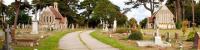
42. Kirkley Cemetery (1880) CREDIT:David Butcher and The Lowestoft Archaeological and Local History Society
43. Land-use in Lowestoft Parish – 17th & 18th Century  A view across Normanston Park - a substantial surviving piece of the medieval South-west Common Field (sometimes found referred to as the West South Field).
44. Lay Subsidy (1327) The meeting of roadways near the original Lowestoft township
45. Lay Subsidy (1524-5) – Part 1 Stamp
46. Lay Subsidy (1524-5) – Part 2 Stamp
47. Lay Subsidy (1568) coin
48. Let This Be a Warning to You (Quarter Sessions Punishment, late 17th Century) pic
49. Literacy Rates in Lowestoft (1560-1730) 18th and 19th Century Horn Books CREDIT:Welcome Collection
50. Local Fishing Industry (c. 1910-60) Tape-recording Index CREDIT:PineappleMetro
51. Lost End of High Street (East Side) – WW2 bomb damage map
52. Lothingland Invasion Scare (1584) pic
53. Lothingland-Lowestoft-Great Yarmouth Disputes – Part 1 (1211-1334) Great Yarmouth Borough Arms (awarded in 1357)
54. Lothingland-Lowestoft-Great Yarmouth Disputes – Part 2 (1355-1729) Corton-Gunton beach area, to the north of Lopham Score (now,Tramp’s Alley) - half a mile or so wider during the 1660s than it is now. Location of the post which marked the limit of Yarmouth's trading jurisdiction, established in 1663
55. Lowestoft Agriculture (17th & 18th Century) Barn
56. Lowestoft Almshouses (c. 1464-1964) CREDIT: Jack Rose Collection
57. Lowestoft and Akethorp (1086-1955) King John Hunting CREDIT:magnacarta.cmp.uea.ac.uk
58. Lowestoft Inns and Shops (16th-18th Century)    Richard Powles’s ink-and-wash view of the High Street in 1784, looking straight down Crown Score. Note the humber of premises with shop fronts. The inn sign on the left, with its portrait of Queen Anne (reigned 1702-14) advertised the “Queen’s Head” premises, halfway down Tyler’s Lane (Compass Street) on the south side. Taken from the Isaac Gillingwater collection of illustrations (c. 1807): Suffolk Archives (Ipswich), 192/3/1.
59. Lowestoft Lighthouses (1609-1975) Lowlight (1820) - Isaac Johnson
60. Lowestoft Listed Buildings – Historic England (15th-19th Century) church
61. Lowestoft Manorial Governance (c. 1580-1730) Part of St. Margaret’s Plain (taken in 2009) - this area being the surviving remnant of the Goose Green/Fair Green area referred to in text, once smallest of the town’s seven areas of common land
62. Lowestoft Market and Fairs (1308-1890) fair
63. Lowestoft Occupations (1561-1750) trades
64. Lowestoft Overseers of the Poor Accounts (1656-1712) The home of Benjamin Ibrook (Overseer of the Poor, 1682 &1692) - a merchant recently arrived in Lowestoft from Southwold, whose main business interests were in fishing and fish-curing.
65. Lowestoft Population Statistics (1561-1750) An ink-and-wash study created by Richard Powles in 1785, which is present in the Isaac Gillingwater collection of illustrations (c. 1800) held by Suffolk Archives (acc. ref. no. 193/2/1).
66. Lowestoft Porcelain: Aspects of Origins, Factory & Workforce (1757-c. 1800)  Illustration 4 - Polychrome jug CREDIT: Norfolk Museums Service.
67. Lowestoft Religious Affiliation (1560-1790)  St. Margaret’s Church (1785) - ink-and-wash study by Richard Powles, present in the Isaac Gillingwater collection of local illustrations (c. 1807) - Suffolk Archives, Ipswich (Acc. No. 193/2/1).
68. Lowestoft Rental (1545) buildings
69. Lowestoft Schools (1570-1730) The grave-slab of Thomas Annot in St. Margaret’s Church, the surviving upper part of which was relocated to the far end of the south aisle behind the organ. Shown in full here, with brass removed, but with the sculpted stone figure of Death holding its dart (arrow). Image to be found in Edmund Gillingwater’s history of the town, p. 299.
70. Lowestoft Timeline (1535 - 1974) history
71. Lowestoft Timeline (c. 700,000 BC/BCE – 1524-5) lithub.com
72. Lowestoft Town Hall (Site and Buildings – 14th -19th Century) Town Chamber & Town Chapel (Richard Powles - 1784)
73. Lowestoft’s Famous Five (Naval Heroes – 17th-18th Century) Sir Thomas Allin, Vice-Admiral of the Red, as depicted by Peter Lely in his “The Flagmen of Lowestoft” - a series of  thirteen portraits of leading Naval commanders involved in the Battle of Lowestoft victory over the Dutch (13 June 1665). Allin's ship, the “Plymouth", is shown flying its red flag below his right hand. Samuel Pepys. saw the overall work of portraiture under way in Lely's studio during April 1666
74. Manorial courts of Lothingland Half-hundred (Mid-16th to mid-18th Century) An ink-and-wash study of the Mutford Bridge area, created by Richard Powles in 1787. This view forms one of the items in the Isaac Gillingwater collection of local illustrations (c. 1807) - Suffolk Archives, Ipswich - 193/2/1.
75. Maritime Trade and the Granting of Port Status (1679) 1780s ink-and-wash view of Lowestoft from the sea, by Richard Powles, with Revenue Cutter “Argus” very much to the fore. To be found in the Isaac Gillingwater collection of illustrations (c. 1807) - Suffolk Archives (Ipswich), 193/2/1.
76. Markets and Fairs in Lothingland & Lowestoft (1208-1703) fair
77. Merchant Fleet Details (16th Century) pic
78. Missing Brasses of St. Margaret’s Church (1645) brass
79. Muster Roll (1535) An English longbow and arrows, as found on the iStock website
80. Muster Roll (1584) Italian matchlock firearm of caliver/musket type, c. 1540. Royal Armouries Collection
81. Name change…(Danish) – late 9th century history
82. Nature of Farming in Lowestoft (17th & 18th Century) The St. Margaret’s Plain area (image taken, some time ago) - once forming part of Lowestoft’s soft, rural, western edge. The southern sector, between Dove Street and St. Peter’s Street, formed Goose Green. The northern part was the town's Fairstead - Dove Street itself once being known as Fair Lane
83. No. 67 High Street (15th-17th Century) 67
84. North Denes Liver Trench (1600s & 1700s) North Denes, published by Rock & Co. of London in 1872
85. Occupied Ground Space – Nos. 5-25 High Street Plots (1600s to 1700s) ogs
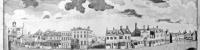
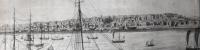
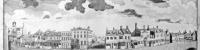
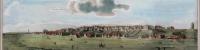
86. Old Lowestoft – A Case For Heritage Status and Funding (14th – 19th Century) A panoramic view of Lowestoft, taken by Richard Powles from the North-east Gun Battery in 1790
87. Old Town of Lowestoft (High Street HAZ – 14th-19th Century) high st
88. Outsider Presence in Lowestoft (1561-1730) Hall
89. Parish Register Data (marriages, baptisms and burials, 1561-1750) RESEND
90. Properties on West Side of High Street (1618) CREDIT: thelandmagazine
91. Recorded Illegitimacy in Lowestoft (1561-1730) pic
92. Recorded Immigration Into Lowestoft  (1436-1544) nationalarchives.gov.uk
93. Regulation of the Lowestoft Community (1550-1750) town Chapel
94. Relief of Distress in Other Communities (1681-1698) St. Margaret’s parish church, where appeals made for the relief of distress in other places would have once been made at Sunday services.
95. Relocation of the Township (c. 1300-1350) CREDIT - John Speed, Suffolk
96. Samuel Morton Peto and the Wider European World (1830-60) peto
97. Ship Money Levy (1636) English Warship 1640 CREDIT:Alamy
98. Sinking of the Armed Smack Nelson (LT 649) – 15 August 1917 CREDIT: Port of Lowestoft Research Society
99. Sorting Out the Sinners in the 17th Century (Diocesan Visitations 1606-39) sinner
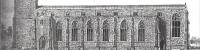
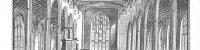
100. St. Margaret’s Church (c. 1130-1567) St.Margaret’s Church southern aspect, captured by Richard Powles in his ink-and-wash study of 1785. His meticulous attention to detail gives a real sense of the building’s architectural splendour and quality of construction. Image taken from the Isaac Gillingwater collection of local illustrations (c, 1807) - Suffolk Archives (Ipswich), Acc. No. 193/2/1.
101. Subscription List for Rebuilding of Town Chamber and Chapel (1698) An ink-and-wash study of the Town Chamber, with Chapel to the rear, executed by Richard Powles in 1784. To be found in the Isaac Gillingwater collection of local illustrations c. 1807 - Suffolk Archives, Ipswich, 193/2/1.
102. Superstition and the Fisherman (c. 1910-1960) Wooden steam drifter
103. The Cocos Island Treasure Hunt (1935) Veracity 1
104. The Day That Cromwell Came to Town (14 March 1643/4) Somerleyton Hall - built c. 1610-20
105. The Gentle Shining of a Lesser Light (1461) CREDIT: lithub.com
106. The Scores (1582-1756) CREDIT:Karen High FB Mariners score
107. The Seven Commons of Lowestoft (14th-19th century) Map
108. Three Dwelling Case Studies (1602, 1682 & 1711) pic
109. Three Key Buildings: Domestic, Religious & Industrial (14th-19th Century) pic
110. Town Hall Raid (8 May 1933) Lowestoft Town Hall c. 1910. Prominent in the fore-ground are the tracks of the Town’s tram system, which opened in July 1903.