
early modern

Heritage Auctions, HA.com have kindly sent us high resolution images of a famous book actually signed by Lowestoft architect George Glover (1811-1890) Book: A parallel of the ancient architecture with the modern (1773)
Added: 23 September, 2023
On this day King George II was rescued from the sea on Lowestoft beach in 1737.
Added: 23 September, 2023
The naval Battle of Lowestoft in June 1665 was the first of the Second Anglo-Dutch War. Held 40 miles (64 km) off the coast, it was a clear victory for the English over the Dutch.
Added: 23 September, 2023
When a fish-house, in the southern part of the town, was entirely washed away, and another fish-house and barn were so exceedingly damaged, as to make it necessary to have them taken down. credit:Gillingwaters History of Lowestoft.
Added: 23 September, 2023
#LowestoftDaysOfChristmas 7th day.. SECOND LIGHTHOUSE "Lowestoft...oldest established Lighthouse Station in Great Britain" (Caister had the first Trinity House leading lights (1607) - and Lowestoft was second (1609))
This is a timeline of Lowestoft's Lighthouse Stations.
Added: 23 September, 2023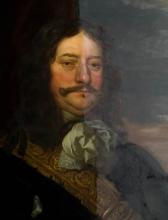
Thirty-three years after she first prepared Lely’s Flagmen of Lowestoft for display, Senior Paintings Conservator Elizabeth Hamilton-Eddy prepares them for the Queen’s House.
credit: National Maritime Museum
Added: 23 September, 2023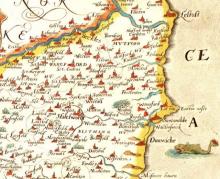
Christopher Saxton map showed Easton Ness as the most easterly point of Great Britain. Over the next decades, the action of the sea caused the salient to migrate north, to Lowestoft Ness.
Added: 23 September, 20231685 A sea survey by Greenville Collins showed the Standford Channel just off-shore (the name eventually contracted to the Stanford Channel).
Added: 23 September, 2023
1676 Samuel Pepys was elected a Master of the Trinity Brethren, and immediately sanctioned a new Lowestoft lighthouse. A new Lighthouse tower was constructed, built of brick, this time on the cliffs. This became known as Lowestoft High Light. Trinity in its earlier records sometimes refers to the northernmost of the two Ness Point foreshore lights as the 'upper' light, which can be confusing.(drawing p93).
Added: 23 September, 2023