early modern
A constant matter of concern during the reign of Henry VIII (1509-47) was that of foreign invasion - particularly by France with the aid of its ally, Scotland. In 1535, a national audit of England’s defensive ability against foreign aggression was ordered by Henry VIII. With there being no regular Army of any kind at the time, lists had to be made of adult males able to fight in all areas of the country – and it was all done, hundred by hundred, to total up the numbers for every shire.
Added: 31 March, 2024The term denes is an earlier version of dunes. It derives from OE dūn, meaning “a hill”, and became applied to coastal sandhills during the late medieval period – being first identified in a printed source dating from the year 1523. In Lowestoft’s case, any undulating effect may never have been very great as a result of tidal action and the effect of the wind, and the progressive development of scrub-growth of one kind and another would have moderated this even further.
Added: 21 February, 2024
A good deal has been written about the scores over the years - not all of it accurate. What follows here is an account of these footways, working from north to south, and looking at them in both a topographical and historical context. The main sources used for the study are a Manor Roll of 1618 (which gives a complete account of landholding in the parish, together with location and tenancy stated) and a series of Manor Court minute books dating from 1582-85 and 1616-1756.
Added: 1 February, 2024
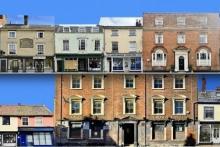
#LowestoftDaysOfChristmas 10th day.. FROM SWAN INN and CROMWELL's HQ to well loved shops in many guises. Nos. 41-42 High Street, as seen today, are replacement buildings for "The Swan" inn, which once occupied the site and served as one of Lowestoft's premier hostelries during the 16th and 17th centuries. It was where Oliver Cromwell stayed overnight on 14 March 1643/44, when he came to Lowestoft (from Cambridge) with a force of cavalry, having heard tell of a shipment of arms either entering or leaving the town (it has never been established which).
Added: 21 December, 2023
Lowestoft, 1550-1750: Development and Change in a Suffolk Coastal Town by David Butcher
A detailed history of the town of Lowestoft, its society, economy, and topography. `A superbly researched study.... An excellent addition not only to the history of Suffolk but of early modern society and economy more generally.' Professor RICHARD SMITH, University of Cambridge.
Added: 12 November, 20231670's The Lowestoft Lights were re-built again. A few years previously John Clayton had erected a coal-light a couple of miles north at Corton. Clayton's efforts to build lighthouses at various locations around the coast were seen by Trinity Brethren as being a threat to their monopoly.
Added: 23 September, 2023
Heritage Auctions, HA.com have kindly sent us high resolution images of a famous book actually signed by Lowestoft architect George Glover (1811-1890) Book: A parallel of the ancient architecture with the modern (1773)
Added: 23 September, 2023
On this day King George II was rescued from the sea on Lowestoft beach in 1737.
Added: 23 September, 2023

